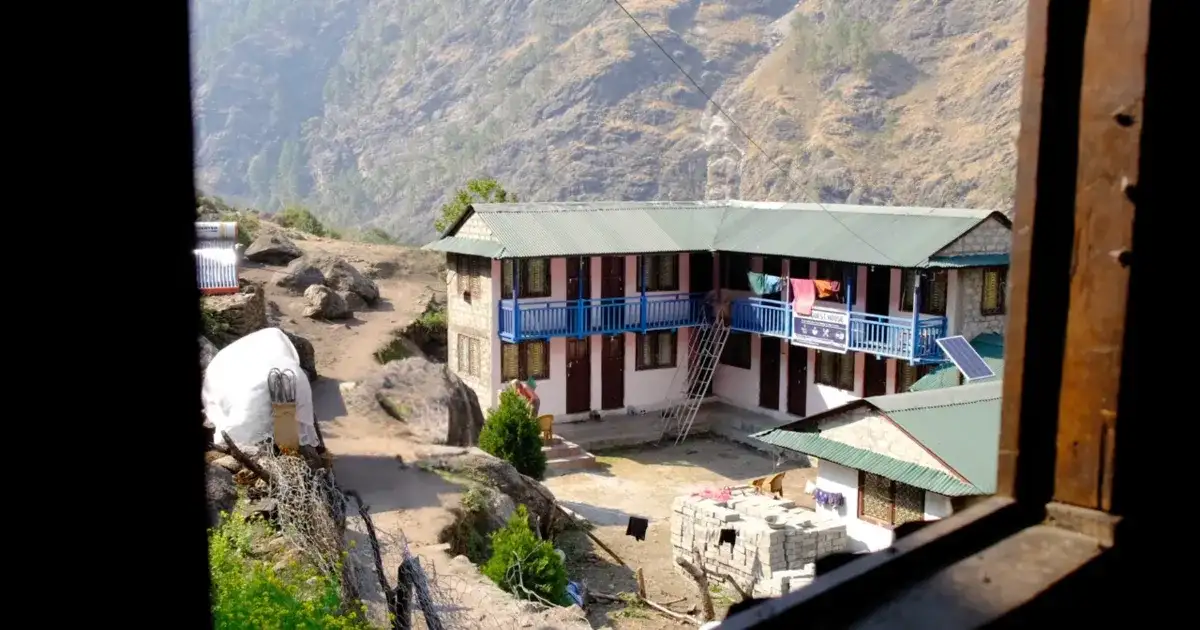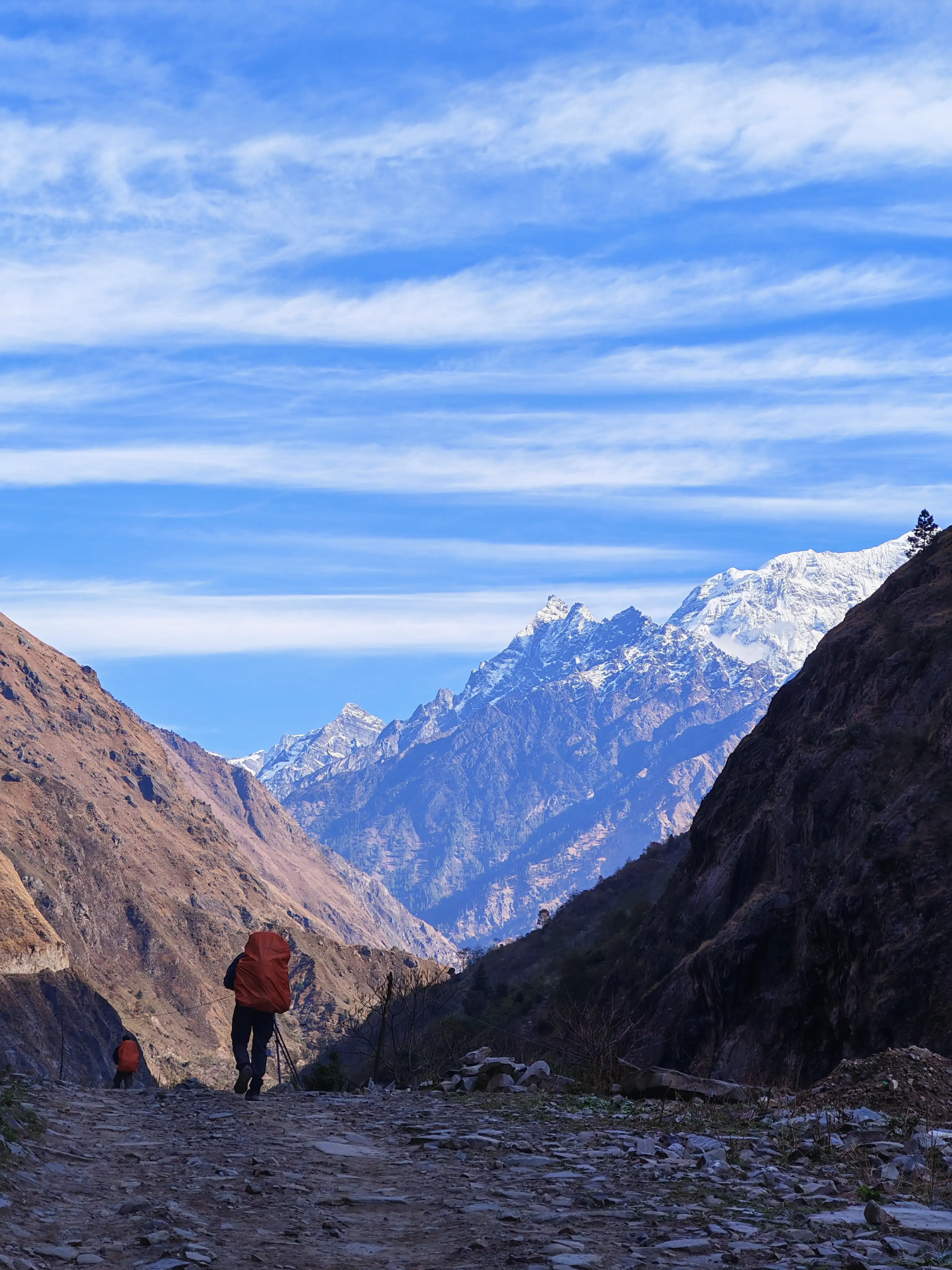
The trek from Lokpa to Chumling takes around 4–6 hours. Time depends upon the trail conditions, walking pace, and breaks. The route covers approximately 7–8 km, although published distances vary by route measurement. Lokpa is generally listed at around 2,240 meters, while Chumling sits at approximately 2,386 meters. The trail descends and climbs through dense pine and rhododendron forests. You will also have to cross small bridges and follow rugged sections of the Shiar/Syar Khola before reaching Chumling.
Morning in Lokpa feels wonderfully quiet. The previous day's walk from Jagat has already taken you away from the busier sections of the Manaslu trail. Here, there are fewer trekkers, fewer buildings, and much more forest. The mountains seem farther away, hidden behind steep slopes and thick vegetation.
After breakfast, you tighten your backpack and leave Lokpa behind.
There is no dramatic road departure or busy trailhead. The path simply disappears into the forest.
For the next few hours, the sound of rushing water becomes your companion. The trail rises and falls through pine and rhododendron woodland, occasionally opening to reveal steep Himalayan cliffs and glimpses of snow-covered peaks. Bridges appear where the valley narrows, and the path winds along rugged slopes above the river.
This is where the Tsum Valley begins to feel different.
You are no longer simply walking toward another Himalayan village. You are entering a secluded valley where Tibetan Buddhist culture, traditional stone houses, mani walls, monasteries, and mountain agriculture have remained closely connected to everyday life.
After several hours of walking, the forest begins to open. Chumling appears ahead.
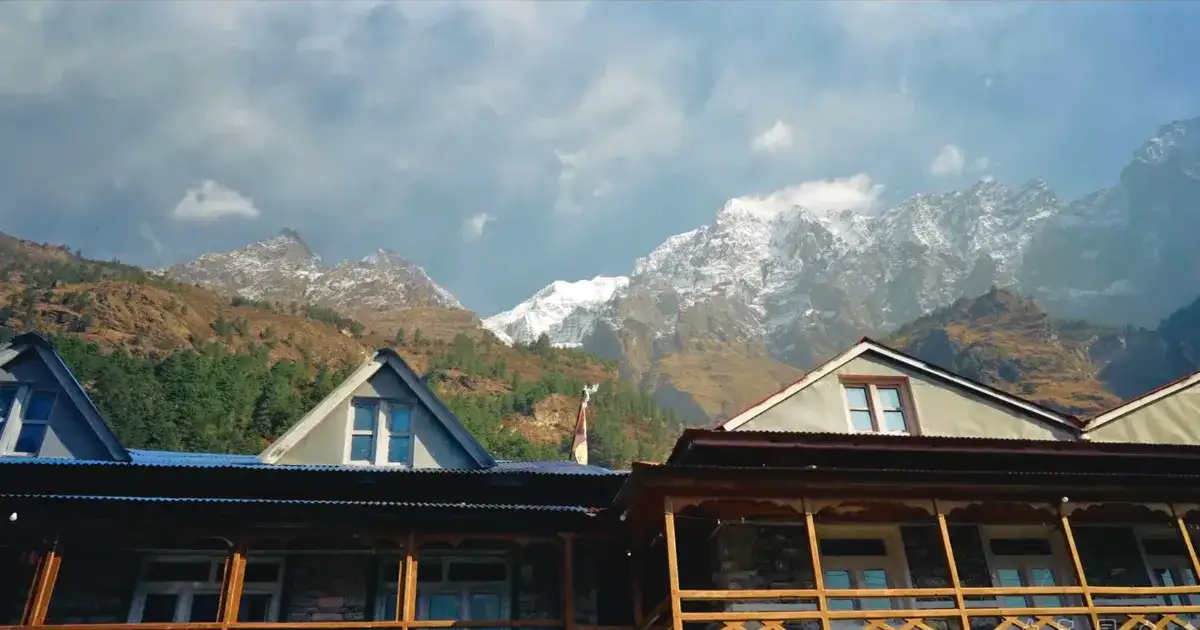
Stone houses, prayer flags, and the quiet rhythm of village life replace the dense forest. The mountains become easier to see, and the atmosphere feels distinctly different from the lower Budhi Gandaki valley.
You have arrived in Chumling, the first major village of the lower Tsum Valley.
The distance between Lokpa and Chumling is not particularly long, but the character of the journey makes it one of the most memorable short trekking days in the region.
Related Article: Trek from Jagat to Lokpa: Distance, Route, Permits, Accommodation & Complete Guide
Where is Chumling?
Chumling is a traditional settlement in the Tsum Valley of Gorkha District, within Chumnubri Rural Municipality.
It lies farther inside the valley than Lokpa and is generally regarded as one of the first significant villages of the Tsum Valley.
The village sits at approximately 2,386 meters and is surrounded by forested slopes and Himalayan peaks.
Chumling is known for its traditional stone houses, Buddhist monasteries, mani walls, prayer flags, and views toward the surrounding mountains.
For trekkers following the classic Tsum Valley route, Chumling is an important overnight stop before continuing toward Chhekampar/Chhokang Paro.

Lokpa to Chumling Walking Time
Most trekkers should allow approximately 4–6 hours.
A fast and experienced trekker may complete it in closer to four hours, while photographers, slower walkers, and groups taking frequent breaks may need five or six hours.
The short walking time does not mean you should rush.
This section is one of the most scenic and culturally interesting parts of the Tsum Valley. Taking time for photographs, bridge crossings, forest views, and village exploration can make the day much more enjoyable.
Lokpa to Chumling Altitude

Lokpa is generally listed at around 2,240 meters, while Chumling is approximately 2,386 meters.
The net elevation gain is therefore only around 146 meters. However, this number can be misleading.
The trail does not climb steadily from Lokpa to Chumling. It moves through a series of descents and climbs. So the total amount of elevation change experienced by your legs is greater than the 146-meter difference.
The relatively modest final altitude gain makes this a useful transition day before the considerably higher elevations ahead.
The following trek from Chumling to Chhekampar climbs to around 3,000 meters, making proper pacing increasingly important.
Lokpa to Chumling Trekking Route
The trail from Lokpa to Chumling is a mixture of forest paths, rocky terrain, river crossings, and mountain trails.
The exact route can vary slightly because of trail maintenance, landslides, and local changes.
Leaving Lokpa
After breakfast, you leave Lokpa and enter the forest.
The trail quickly becomes quieter. Buildings disappear behind you, and thick vegetation surrounds the path.
Pine and rhododendron are common along this section, creating shade and making the walk particularly pleasant during the warmer months.
This is also a good place to slow down.
Rather than focusing only on reaching Chumling, pay attention to the changing vegetation, bird sounds, waterfalls, and occasional mountain views through the trees.
Descending Toward the River Valley
The trail initially includes a descent toward the river valley.
The path can be rocky and uneven, so trekking poles are useful.
You may also encounter narrow sections where the trail follows the contours of steep slopes.
This part of the route is one reason the trek can feel more challenging than the distance suggests.
There are not many facilities between Lokpa and Chumling, so make sure you leave Lokpa with enough drinking water and snacks for the morning.
Through Pine and Rhododendron Forest
The forest is one of the defining features of this trek.
During spring, rhododendrons can add splashes of color to the landscape, while pine trees dominate many sections of the trail.
The dense vegetation also gives the trek a feeling of isolation.
Unlike some of Nepal's famous trekking routes, you will not encounter a continuous chain of lodges, shops and restaurants.
The forest is the landscape. The river is the soundtrack.
And the trail is often quiet enough to make you feel genuinely removed from modern life.
Bridges and the Shiar/Syar Khola
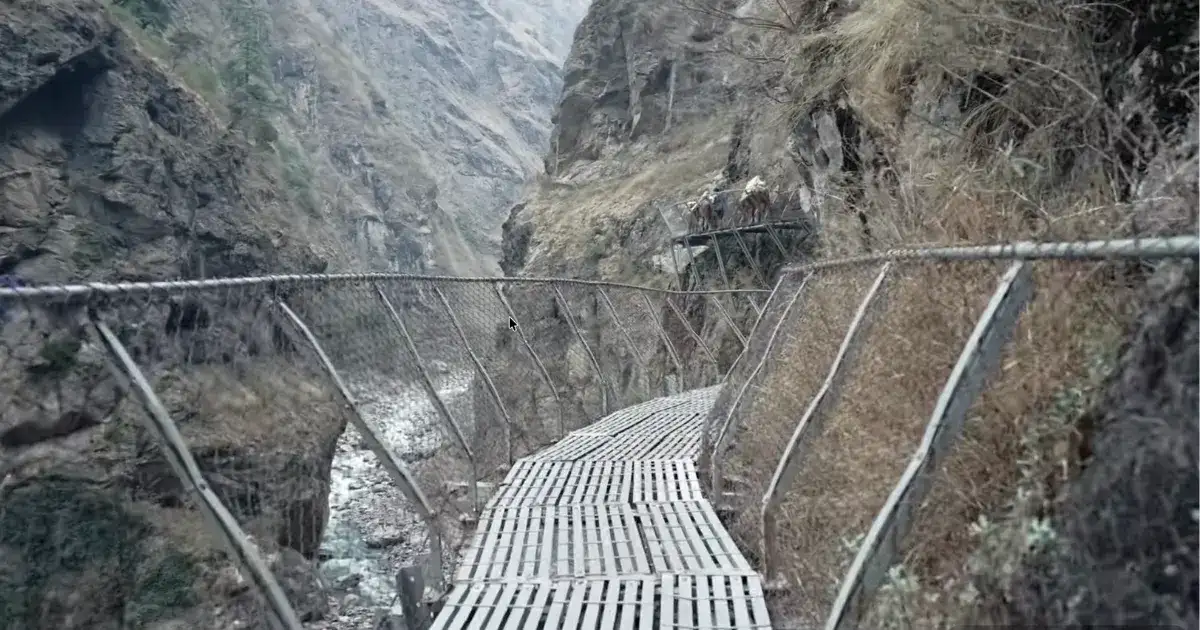
As you continue, the trail crosses small bridges and follows the river system toward Chumling.
Depending on the current trail alignment, you may encounter suspension or cantilever-style bridge sections.
Take extra care when the surface is wet.
The river below can look deceptively calm from a distance, but the terrain is steep, and the water moves quickly through the gorge.
Your guide will normally direct you through the safest crossing point.
Approaching Chumling
As you move closer to Chumling, the forest gradually begins to open.
The valley feels wider, and mountain views become more noticeable.
The first signs of the village appear through the trees.
Traditional houses, stone walls, prayer flags, and cultivated land begin to replace the wilderness.
The change is subtle but unmistakable.
You have moved from the forested entrance of Tsum Valley into a living Himalayan community.
Is the Lokpa to Chumling Trail Difficult?
The Lokpa to Chumling trek is moderate. The main challenge is the terrain.
Expect:
- Rocky trails
- Short steep climbs
- Descents
- Forest paths
- Uneven surfaces
- River crossings
- Narrow mountain sections
- Limited services between villages
The altitude itself is not the main concern on this particular day because the elevation gain is relatively small.
The greater challenge is maintaining your balance and energy over changing terrain and uneven trails.
Can You Trek from Lokpa to Chumling Without a Guide?
No.
Tsum Valley is a restricted trekking area, and foreign trekkers must use a licensed trekking guide through a registered trekking agency.
However, Nepal changed its restricted-area policy in March 2026.
The old minimum group-size requirement was removed, meaning an individual foreign trekker can now obtain a restricted-area permit without finding a second trekker to join the trip.
But this does not mean you can independently hike the route without a guide.
The current arrangement is essentially
- Solo traveler: Allowed.
- Solo without guide: Not allowed.
- Licensed guide: Mandatory.
- Registered trekking agency: Required for permit processing.
This is an important update because many older Tsum Valley trekking articles still contain the previous two-person rule.
Accommodation in Chumling
Accommodation in Chumling is basic but comfortable enough for trekkers.
You will mainly find small teahouses and mountain lodges rather than hotels.
A typical lodge may provide:
- Twin-sharing rooms
- Basic beds and mattresses
- Blankets
- Shared bathrooms
- Dining room
- Simple local meals
- Tea and coffee
- Limited charging facilities
- Hot water, depending on the lodge
The facilities are significantly more basic than those found in Kathmandu or popular trekking hubs in Nepal. That is part of the experience.
Chumling is a remote mountain village, and accommodation should be viewed as a place to rest and connect with local life rather than a conventional hotel.
Do You Need to Book Accommodation in Chumling?
During the main trekking seasons, advance arrangements are recommended. There are several teahouses, but the overall accommodation capacity is limited.
A guide or trekking agency can contact a lodge ahead of arrival and reserve rooms.
This is particularly useful if you are:
- Traveling in a group
- Trekking during October or November
- Arriving late in the afternoon
Food on the Lokpa to Chumling Trail
Do not expect restaurants between Lokpa and Chumling.
Because the walking day is relatively short but remote, it is sensible to eat breakfast in Lokpa and carry snacks.
Depending on your trekking arrangement, you may carry a packed lunch or have lunch after arriving in Chumling.
Common meals in the Tsum Valley include:
- Dal bhat
- Vegetable curry
- Fried rice
- Noodles
- Pasta
- Potato dishes
- Eggs
- Tibetan bread
- Porridge
- Soup
- Tea
- Coffee
Dal bhat remains one of the most reliable choices for trekking because it provides a filling combination of rice, lentils, and vegetables.
If you have dietary restrictions, tell your guide and lodge in advance.
Drinking Water Between Lokpa and Chumling
Water sources are available in mountainous environments, but natural water should not automatically be considered safe to drink. Carry your own bottle or hydration bladder.
You can treat water using:
- Water filter
- Purification tablets
- UV purifier
- Boiled water
Avoid relying entirely on bottled water. Reducing plastic waste is particularly important in remote Himalayan communities where waste collection and disposal infrastructure are limited.
Mobile Network and Internet
Mobile connectivity can be inconsistent between Lokpa and Chumling. There may be stretches with no reliable signal.
Do not plan to work online or maintain constant communication during this section.
Before leaving Kathmandu, download:
- Offline maps
- Important documents
- Trekking itinerary
- Emergency contact information
- Hotel information
- Flight details
Once you are in Chumling, connectivity may still be limited, depending on the network and weather.
Electricity and Charging in Chumling
Electricity is available in some lodges, but charging facilities should not be treated as guaranteed.
Bring a good power bank if you rely on:
- Smartphone
- GPS device
- Camera
- Drone
- Headlamp
Photographers should carry spare batteries because cold conditions and frequent camera use can drain batteries quickly.
What Makes Chumling Special?
Chumling is not simply another overnight stop.
It is one of the first places where the cultural character of the Tsum Valley becomes particularly visible.
The village features traditional architecture, stone-paved paths, mani walls, prayer flags and Buddhist monasteries.
Several sources identify Panago Gompa, Mani Dhungyur and Gurwa Gompa among the monasteries associated with Chumling.
Rather than rushing to your lodge after arrival, leave some time to explore the village respectfully.
Walk slowly.
Look at the traditional houses.
Observe the prayer flags moving above the rooftops.
Notice the mani walls.
And if you visit a monastery, follow local customs and ask before taking photographs.
Monasteries to Visit in Chumling
Panago Gompa
Panago Gompa is one of the Buddhist religious sites associated with Chumling.
It provides an opportunity to understand the spiritual character of the village and the wider Tsum Valley.
Mani Dhungyur Gompa
Mani Dhungyur is another important monastery in the Chumling area.
The presence of monasteries so close to everyday village life illustrates how closely Buddhism and local culture are connected in Tsum.
Gurwa Gompa
Gurwa Gompa is also traditionally associated with Chumling.
If your itinerary allows, ask your guide about visiting the monasteries and the appropriate local etiquette.
Do not treat monasteries simply as photo locations. They remain active religious spaces.
Mountain Views from Chumling
One of the rewards of reaching Chumling is the improvement in mountain views.
Depending on weather and visibility, you may see parts of the Ganesh Himal range, Shringi Himal, and surrounding Himalayan peaks.
The exact views vary depending on your position in the village and the cloud conditions.
Early morning is often a good time for photography because clouds frequently build later in the day.
If mountains are your priority, wake up early and look for an open viewpoint around the upper part of the settlement.
Best Time for the Lokpa to Chumling Trek
The best seasons are generally spring and autumn.
Spring: March to May
Spring is an excellent time for the forest section.
Rhododendrons begin flowering, temperatures become more comfortable, and the landscape becomes increasingly green.
March can still be cold, while April and May generally bring warmer daytime conditions.
For photographers, April can be particularly rewarding because of the combination of flowering forests and mountain scenery.
Autumn: September to November
Autumn is usually the most popular season.
The monsoon has generally cleared the atmosphere, giving trekkers better chances of mountain views.
October and November can offer crisp mornings and excellent visibility. However, the popularity of autumn means accommodation can become busier.
Winter: December to February
Winter is possible but colder.
The lower sections around Lokpa and Chumling may remain accessible, but temperatures can fall significantly at night.
If you trek during winter, bring adequate insulation and check current trail conditions before departure.
Monsoon: June to August
The monsoon is generally the least predictable season. Rain can make forest trails slippery and increase the risk of landslides or trail damage.
Cloud cover can also obscure mountain views.
If traveling during the monsoon, allow flexibility and rely on your local guide for current trail information.
What to Pack for Lokpa to Chumling
You do not need a mountaineering setup for this section, but you should be prepared for remote mountain conditions.
Carry:
- Good trekking shoes
- Trekking poles
- Lightweight rain jacket
- Waterproof backpack cover
- Fleece jacket
- Warm layer
- Trekking trousers
- Quick-drying shirts
- Sun hat
- Sunglasses
- Sunscreen
- Reusable water bottle
- Water purification method
- Energy snacks
- Headlamp
- Power bank
- Camera batteries
- Personal medication
- Basic first-aid supplies
- Passport and permit copies
If Chumling is part of a longer Tsum Valley itinerary, pack for colder conditions because the trail climbs above 3,000 meters over the following days.
Safety Tips for the Lokpa to Chumling Trek
The trail is not technical, but its remoteness means preparation matters.
- Start after breakfast rather than leaving very late.
- Keep your pace comfortable.
- Use trekking poles on steep or slippery sections.
- Take extra care on bridges.
- Do not walk too close to unstable cliff edges.
- Avoid shortcuts.
- During rainy weather, ask your guide about trail conditions before leaving.
- Carry enough water and snacks because food services are limited between the two villages.
- Most importantly, stay with your guide and follow the established route.
What Wildlife Can You See?
The forests around the Tsum Valley provide habitat for a variety of Himalayan wildlife and birds.
While sightings are never guaranteed, you may encounter birds, monkeys, and other forest wildlife.
The dense forest is more likely to reveal sounds and movement than dramatic animal sightings.
Walk quietly if you want a better chance of observing wildlife.
Do not feed wild animals.
Is the Lokpa to Chumling Trek Suitable for Beginners?
Yes, with preparation.
The route does not require technical climbing skills, and the walking duration is manageable.
However, beginners should understand that this is a remote Himalayan trail.
You will not have the same level of infrastructure found on popular trekking routes.
A beginner should therefore:
- Train with regular walking before the trek
- Use comfortable trekking footwear
- Carry adequate water
- Maintain a steady pace
- Follow the guide's instructions
- Avoid rushing
- Be prepared for basic accommodation
The following day from Chumling to Chhekampar involves a much greater elevation gain, so conserving energy here is important.
Photography Tips for Lokpa to Chumling
This is one of the better short sections of the Tsum Valley for photographers. Early morning in Lokpa can provide atmospheric forest scenes.
As you move through the trees, look for:
- Sunlight filtering through pine trees
- Rhododendron flowers
- River crossings
- Suspension bridges
- Waterfalls
- Mountain glimpses through the forest
- Prayer flags
- Mani walls
- Traditional stone houses
- Chumling village
- Ganesh Himal views
Instead of taking only wide mountain photographs, capture details of the trail.
The forest, bridges, and village architecture tell as much of the Tsum Valley story as the mountains.
Respecting Local Culture in Chumling
Tsum Valley has a strong Tibetan Buddhist cultural identity.
Visitors should be particularly mindful around monasteries, prayer wheels, mani walls, chortens, and religious ceremonies.
A few simple rules go a long way:
- Walk around religious monuments clockwise.
- Do not climb on mani walls or chortens.
- Ask before photographing people.
- Ask permission before entering monasteries.
- Dress respectfully around religious sites.
- Do not disturb religious objects.
- Avoid loud behavior in villages and monasteries.
The goal is not to behave like a visitor in a museum. You are walking through a living Himalayan community.
What Comes After Chumling?
Chumling is not the end of the Tsum Valley journey.
For most trekkers, the next major destination is Chhekampar/Chhokang Paro, at approximately 3,000 meters.
That section involves a much more substantial climb.
The landscape changes again as you move higher into the valley, with wider mountain views, traditional settlements, cultivated fields, and increasingly strong Tibetan Buddhist influences.
From there, the classic route continues toward Nile, Chule and Mu Gompa, depending on your itinerary.
This makes Chumling an important transition point.
Lokpa introduces you to the Tsum Valley.
Chumling lets you experience it.
And the trail beyond Chumling takes you deeper into its high mountain world.
Frequently Asked Questions About Lokpa to Chumling
Is lunch available between Lokpa and Chumling?
Food services are very limited between the two main overnight villages. It is safer to have breakfast in Lokpa, carry snacks, or have a lunch directly to Chumling.
Is there a checkpoint between Lokpa and Chumling?
Lokpa serves as an important entry point for the Tsum Valley restricted area, where trekking documentation may be checked. Your guide will handle the permit and checkpoint procedures.
Can I return to Lokpa after reaching Chumling on the same day?
Technically, you could return if conditions allow, but it is unnecessary for a standard itinerary. Staying overnight in Chumling makes more sense because it avoids repeating the trail and positions you well for the next day's higher-altitude trek.
Is there a health post in Chumling?
Chumling has basic health services reported by current trekking sources, but it should not be considered a full medical facility. You should carry personal medication and travel insurance suitable for remote-area trekking.
Are there shops in Chumling?
There are small local shops and teahouse services, but shopping choices are very limited compared with towns and major trekking centers. Carry essential personal items from Kathmandu.
Can I buy trekking gear in Chumling?
No. Do not expect proper trekking equipment shops. Purchase or rent important equipment before entering the remote trekking region.
Is there a helicopter landing area near Chumling?
Emergency helicopter evacuation may be possible depending on weather, landing conditions, and operational circumstances, but you should never assume that an aircraft can land immediately. Travel insurance with helicopter evacuation coverage and a trekking agency capable of coordinating emergencies are essential.
Is photography allowed inside Chumling's monasteries?
Rules vary by monastery. Always ask your guide or a local caretaker before taking photographs inside religious buildings. Some sacred objects or interiors may not be photographed.
Can I see Ganesh Himal from Chumling?
Yes, Chumling is known for mountain views that can include the Ganesh Himal range, although visibility depends on weather, clouds and your exact viewpoint in the village.
Should I carry trekking poles for Lokpa to Chumling?
Trekking poles are recommended. They are particularly useful on the rocky descents, uneven forest paths, and bridge approaches.
Is there a risk of getting lost between Lokpa and Chumling?
The route is established, but trail conditions and junctions can change. Because the Tsum Valley is a restricted trekking area and a licensed guide is mandatory, follow your guide rather than relying solely on a phone map.
Final Thoughts
The trek from Lokpa to Chumling is one of those Himalayan journeys where the destination is only half the story.
You leave Lokpa and disappear into the forest.
For hours, the trail winds through pine and rhododendron trees, crossing bridges and following the sounds of mountain rivers. The landscape feels wild and quiet, almost as though the outside world has been left behind.
Then Chumling appears. Stone houses replace trees. Prayer flags move in the mountain breeze.
Mani walls and monasteries remind you that this remote landscape is not untouched wilderness. It is a living cultural landscape shaped by generations of Tsumba communities.
And that is what makes this short trekking day special.
The Lokpa to Chumling trek is not about conquering a difficult pass or reaching an enormous altitude.
It is about going deeper.
Deeper into the forest.
Deeper into the Tsum Valley.
And deeper into one of Nepal's most fascinating Himalayan cultures.