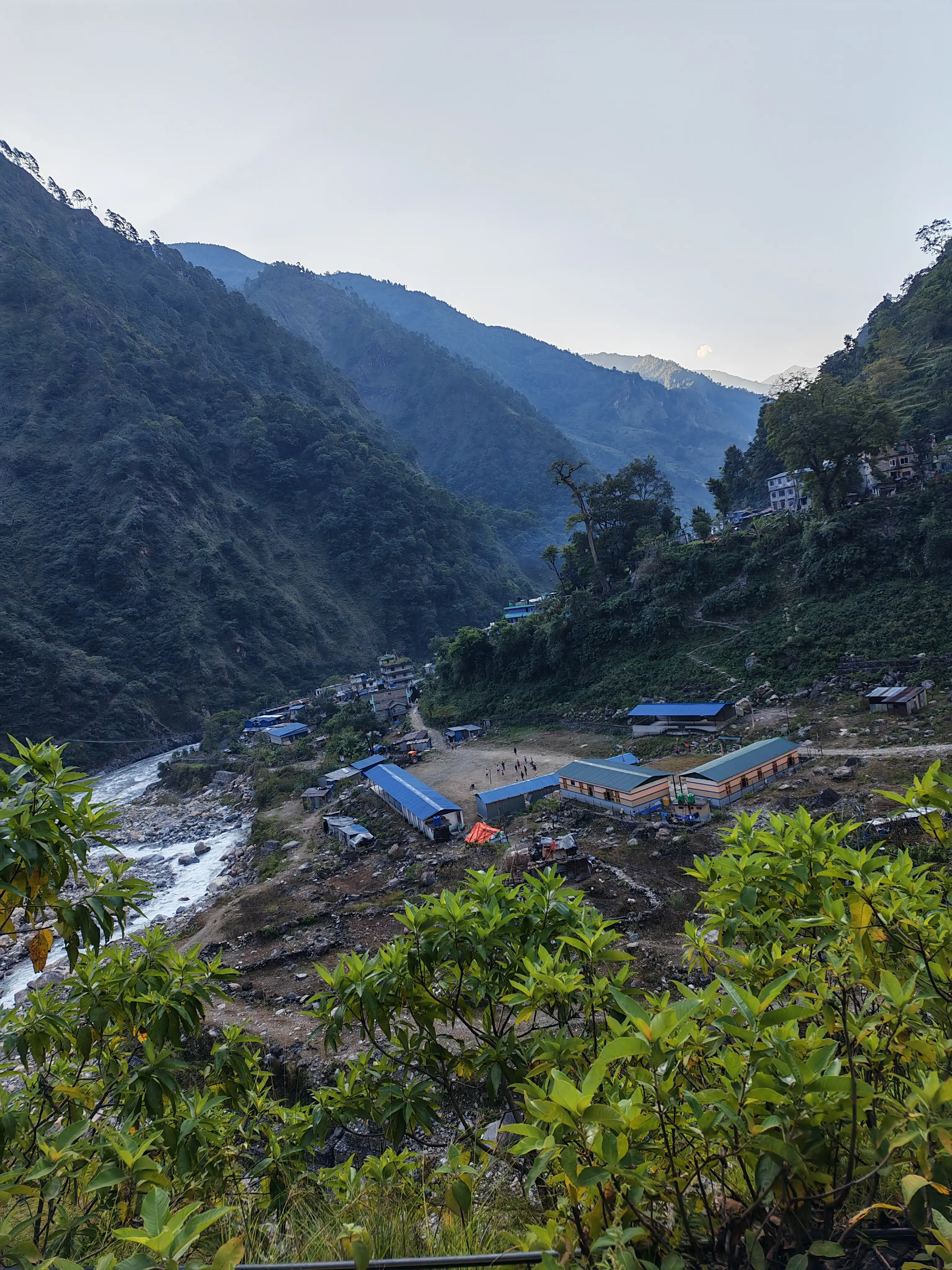
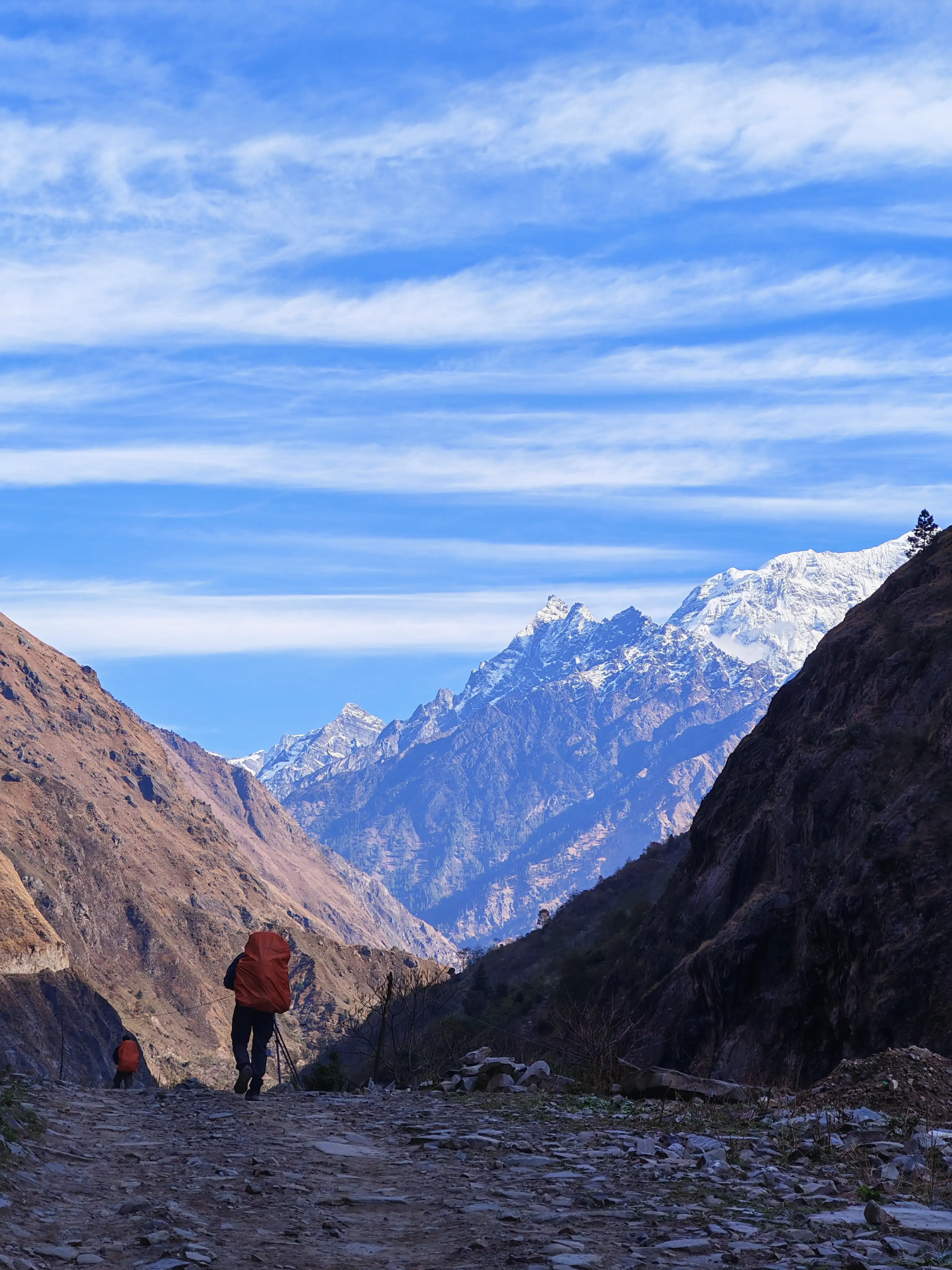
Jagat Village (1,340 m / 4,396 ft) is the official entrance to the Manaslu Conservation Area and one of the most important villages on the Manaslu Circuit Trek. Jagat Village marks the beginning of the restricted trekking region where you undergo permit verification before continuing toward Deng, Namrung, Sama Gaun, and Larkya La Pass. The village is known for its traditional stone-paved streets, terraced hillsides, friendly teahouses, and rich Gurung culture.
More About Jagat Village
Jagat Village is where the journey truly begins. While many start walking from Machha Khola, arriving in Jagat feels like crossing an invisible boundary between the lower river valleys and the remote Himalayan wilderness.
Jagat offers the first authentic glimpse into the mountain lifestyle that makes the Manaslu and Tsum Valley one of Nepal's most rewarding trekking adventures. The village is surrounded by steep green hills, cascading waterfalls, and centuries-old stone houses. The village welcomes you with narrow alleys, warm teahouses, and peaceful surroundings where the sound of the Budhi Gandaki River echoes through the valley.
Jagat is also an administrative milestone. It serves as the official checkpoint for the Manaslu Conservation Area. Your trekking permits are verified before you continue into the restricted region. Beyond this point, the landscape gradually transforms to ancient monasteries and the dramatic high mountains surrounding them.
Where is Jagat Village?
Jagat Village lies in the northern part of Gorkha District within Gandaki Province of Nepal. The village is located just above the Budhi Gandaki River; it is strategically positioned on the historic trade route that once connected Nepal with Tibet.
Today, Jagat is one of the most significant settlements along the Manaslu Circuit Trek. Nearly every trekker entering the restricted Manaslu region passes through this village, making it one of the busiest yet most charming stops on the trail.
Distance to Major Destinations
| Destination | Approximate Distance |
| Kathmandu | 170 km |
| Machha Khola | 22 km trekking |
| Deng | 20 km trekking |
| Namrung | 33 km |
| Sama Gaun | 63 km |
| Larkya La Pass | 95 km |
Although road construction has extended farther into the valley in recent years, most trekking itineraries still include Jagat as the first major overnight destination inside the conservation area.
Trekking from Machha Khola to Jagat
The walk from Machha Khola to Jagat is one of the scenic days of the lower Manaslu Circuit.
You will follow the Budhi Gandaki River through forests, terraced farms, waterfalls, and several suspension bridges. The trail passes villages such as Khorlabesi, Tatopani, Dovan, and Yaruphant before climbing a well-built stone staircase into Jagat.
Although the elevation gain is moderate, the day involves frequent ascents and descents, making it more physically demanding than the numbers suggest. Most hikers complete the journey in 6 to 7 hours, depending on weather and pace.
During the monsoon season, sections of the trail may become muddy or affected by landslides, requiring extra caution.
First Impressions of Jagat Village
Arriving in Jagat feels distinctly different from the villages below.
Instead of scattered roadside settlements, you will enter a compact village with beautifully paved stone lanes, traditional houses, neatly stacked firewood, colorful flower gardens, and prayer flags fluttering above rooftops.
The atmosphere is peaceful yet lively during trekking seasons. Guides greet familiar lodge owners, porters rest after a long day's walk, and hikers gather over cups of tea to share stories from the trail.
Unlike busier trekking destinations such as Namche Bazaar or Manang, Jagat retains a quiet charm that reflects everyday village life rather than tourism alone.
History of Jagat Village
The history of Jagat is closely connected with trade and migration across the Himalayas.
For centuries, traders traveling between Tibet and Nepal used this valley as an important corridor. Caravans carrying salt from Tibet exchanged goods with merchants transporting grains, spices, and household products from Nepal's middle hills.
The village gradually developed into a resting point where traders could find shelter, food, and livestock before continuing their journey.
After the establishment of the Manaslu Conservation Area in 1998, Jagat gained new importance as tourism expanded in the region. Lodges were built to accommodate trekkers, yet the village preserved much of its traditional architecture and cultural identity.
Unlike heavily commercialized trekking hubs, Jagat continues to balance tourism with everyday agricultural life.
Landscape Around Jagat
Jagat sits within a spectacular river valley carved by the Budhi Gandaki.
Steep cliffs rise dramatically above terraced fields where local families cultivate maize, millet, rice, potatoes, and seasonal vegetables.
Dense forests surrounding the village are home to rhododendron, oak, bamboo, and various subtropical plant species.
Numerous waterfalls descend from the surrounding hillsides, especially during the monsoon season, creating one of the greenest sections of the Manaslu trail.
The combination of cultivated farmland, rugged mountains, and flowing rivers creates a landscape that changes beautifully throughout the year.
Local Culture and Community in Jagat Village
Most residents of Jagat belong to the Gurung community, whose traditions have shaped the cultural identity of the lower Manaslu region.
Daily life revolves around farming, livestock rearing, and increasingly, trekking tourism. Many families operate small teahouses while continuing agricultural work during the growing season.
Visitors are often welcomed with genuine hospitality. Conversations with local lodge owners provide insight into mountain life, seasonal farming, and the evolving role of tourism in supporting the community.
Traditional festivals, local dances, and religious ceremonies continue to play an important role. This allows you to experience authentic Himalayan culture beyond the trekking trail.
Accommodation in Jagat Village
Jagat offers a comfortable selection of family-run teahouses and lodges.
Most accommodations provide:
- Twin-sharing rooms with simple beds and blankets
- Shared bathrooms, with a few lodges offering attached facilities
- Charging facilities
- Basic Wi-Fi, though reliability varies
- Hot showers, usually available for an extra charge
Rooms are simple but clean, and the warm hospitality of local hosts is often one of the highlights of staying overnight in Jagat.
During the peak trekking seasons of spring (March–May) and autumn (September–November), booking through a trekking agency or arriving early in the afternoon increases the likelihood of securing your preferred lodge.
Food Available in Jagat
Despite its remote location, Jagat offers a surprisingly varied menu.
Common meals include:
- Dal Bhat (the staple Nepali meal)
- Fried rice
- Vegetable curry
- Noodles
- Pasta
- Pizza
- Tibetan bread
- Pancakes
- Chapati
- Eggs prepared in various styles
- Fried potatoes
- Momos
- Soups
- Tea, coffee, hot lemon, and ginger honey tea
Dal Bhat remains the most popular choice for its nutritional value and the option of unlimited refills at many teahouses. Locally grown vegetables often add freshness to meals, while traditional Gurung hospitality enhances the dining experience.
For food safety, you are advised to eat freshly cooked meals and avoid uncooked foods, particularly during the monsoon season.
Wildlife Around Jagat Village
Jagat lies within the Manaslu Conservation Area and is recognized for its exceptional biodiversity. The forests surrounding the village support a wide variety of wildlife, birds, and plant species.
Mammals
- Himalayan Langur
- Barking Deer
- Himalayan Goral
- Wild Boar
- Yellow-throated Marten
Rare species such as the snow leopard, Himalayan black bear, and red panda inhabit the conservation area but are typically found much higher in remote forests.
Birds
Birdwatchers often enjoy the lower section of the Manaslu trail because of its rich birdlife.
Common species include:
- Himalayan Monal
- Kalij Pheasant
- Verditer Flycatcher
- White-capped Water Redstart
- Laughing Thrushes
- Eagles
- Himalayan Griffon Vulture
Morning walks around Jagat provide the best opportunity for birdwatching.
Flora Around Jagat
The vegetation around Jagat reflects the subtropical climate of the lower Budhi Gandaki Valley.
You will pass through forests containing:
- Rhododendron
- Oak
- Pine
- Bamboo
- Alder
- Ferns
- Moss-covered cliffs
- Wild orchids (seasonal)
Photography Opportunities in Jagat Village
Jagat offers numerous opportunities for landscape and cultural photography. Some of the best photography locations include:
- Stone-Paved Village Streets
- Budhi Gandaki River
- Waterfalls
- Suspension Bridges
- Terraced Fields
- Village Life
Frequently Asked Questions
Is Jagat the starting point of the Manaslu Circuit Trek?
Not usually. Most trekkers begin walking from Machha Khola after driving from Kathmandu. But you can drive to Jagat, as there is road access to Jagat village.
Are permits checked in Jagat?
Yes. Trekking permits are officially verified at the Jagat checkpoint before entering the restricted section of the Manaslu Circuit. You should also take a local area permit from Jagat village.
Can independent trekkers stay in Jagat?
While accommodation is available for all visitors, the Manaslu Circuit Trek requires trekkers to travel with a licensed guide under current trekking regulations.
Is there electricity in Jagat?
Yes. Most teahouses provide electricity, although charging electronic devices may involve an additional fee.
Does Jagat have Wi-Fi?
Several lodges offer paid Wi-Fi, but speeds are generally slow, and connections can be unreliable.
How difficult is the trek to Jagat?
The trail from Machha Khola to Jagat is considered moderately difficult. Frequent ascents, descents, suspension bridges, and stone staircases require a reasonable level of fitness.
Final Thoughts
Jagat Village is much more than a convenient overnight stop on the Manaslu Circuit Trek. It marks the beginning of one of Nepal's most remarkable Himalayan journeys, where ancient trade routes, rich Gurung culture, and the pristine landscapes of the Manaslu Conservation Area come together.
Jagat offers visitors a meaningful introduction to the adventure ahead. Whether you're trekking toward Larkya La Pass, exploring remote mountain villages, or simply enjoying the slower pace of life along the Budhi Gandaki Valley, Jagat provides an authentic first impression of the Manaslu region.
Take time to wander its quiet lanes, share a meal with local hosts, and appreciate the history woven into every corner of the village.