
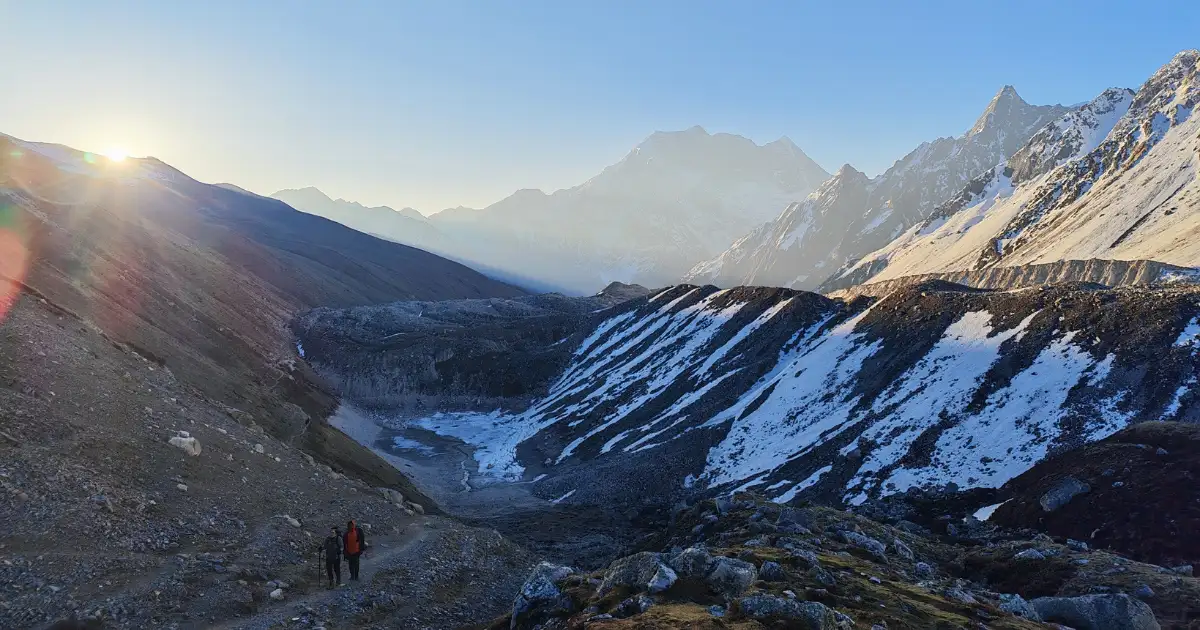
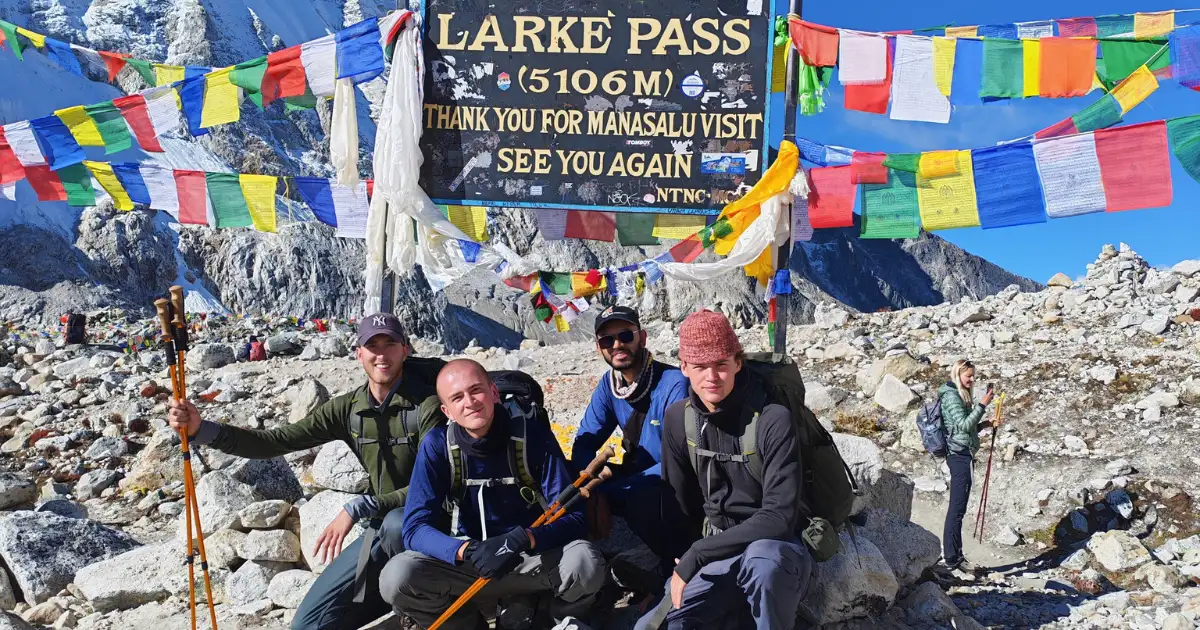
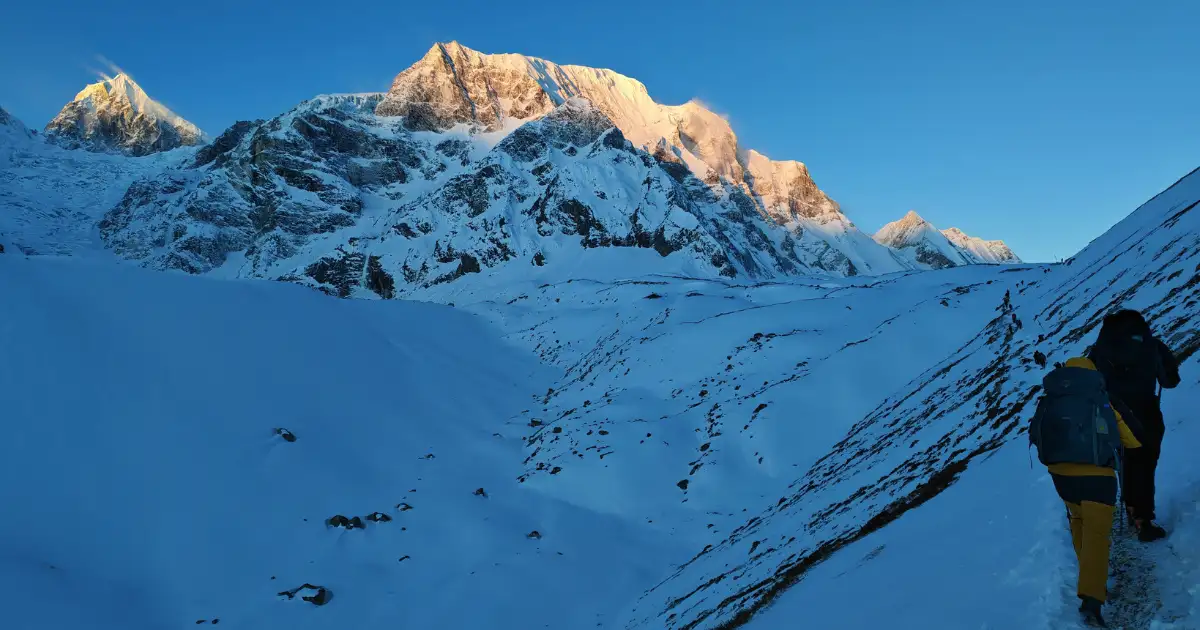
- One of the highest and most scenic trekking passes in Nepal, offering sweeping views of Himlung Himal, Cheo Himal, Kang Guru, and Annapurna II.
- Trek in the shadow of the world’s eighth-highest mountain, also known as the “Mountain of the Spirit,” with ever-changing perspectives of its massive glacier-covered slopes.
- The Manaslu region offers a quieter, more peaceful trekking experience with minimal tourist traffic.
- Pass through Samagaon, Samdo, and other traditional settlements where Buddhist culture, prayer flags, mani walls, and monasteries define daily life.
- Walk through a protected region rich in biodiversity, home to Himalayan wildlife such as snow leopards, Himalayan tahr, and blue sheep.
- Hike alongside deep gorges, suspension bridges, waterfalls, and terraced hills that gradually transform into high alpine landscapes.
- Experience a complete transition from subtropical forests to alpine meadows and glacial terrain as altitude increases.
- Explore Pungyen Gompa and other spiritual landmarks that reflect centuries of Tibetan Buddhist heritage.
- Enjoy panoramic mountain views, including Manaslu, Himalchuli, Ngadi Chuli, Ganesh Himal, and peaks in the Annapurna range.
- Stay in locally run teahouses that offer simple accommodation, warm hospitality, and traditional Nepali meals.
- Ideal for those seeking raw Himalayan nature without the commercialized trekking routes found elsewhere in Nepal.
- As a restricted-area trek, tourism is carefully regulated, helping preserve local culture and environment.
Manaslu Circuit Trek
From $950 $1100 /person
DAYS
13 Days
GRADE
Moderate
STARTING ALTITUDE
870 m (2,851 ft.) Machhakhola
MAX. ALTITUDE
5,106 m (16,752 ft.) Larkye La Pass
ACCOMMODATION
Teahouse/Lodge
BEST SEASON
Springs and Autumn (March to June and September to December)
MEALS
Breakfast, Lunch & Dinner with 3 Cup of Hot Drinks a day
AVERAGE WALK PER DAY
5-7 Hours
Trip Highlights
Overview
The Manaslu Circuit Trek is a remote Himalayan trekking route in Nepal that circles Mount Manaslu (8,163m), and crosses the high-altitude Larkya La Pass (5,106m). It typically takes 14–16 days and offers a quiet, culturally rich alternative to the busier Everest and Annapurna trails.
The Manaslu Circuit Trek is one of Nepal’s most rewarding long-distance trekking routes, located in the restricted Manaslu region near the Tibetan border. The trail encircles Mount Manaslu, also known as the “Mountain of the Spirit." You will then gradually climb from subtropical river valleys into high alpine terrain before reaching the dramatic Larkya La Pass.
Unlike the more commercial trekking regions of Nepal, the Manaslu trail remains relatively untouched. This makes it especially attractive to those seeking solitude, authenticity, and raw Himalayan landscapes. The route passes through traditional Gurung and Tibetan-influenced villages, where centuries-old Buddhist culture, monasteries, prayer wheels, and mani walls shape everyday life.
The journey begins in the lowland villages near Machha Khola and follows the Budhi Gandaki River valley, steadily ascending through terraced hills, dense forests, and suspension bridges. As altitude increases, the scenery shifts dramatically into glacial valleys and snow-covered peaks surrounding Manaslu, Himalchuli, Ngadi Chuli, and other Himalayan giants.
One of the defining highlights of the trek is crossing the Larkya La Pass. It is a high mountain pass at 5,106 meters that connects the Manaslu region with the Annapurna region. The pass offers panoramic views of Himlung Himal, Cheo Himal, and Annapurna II, making it one of the most scenic high passes in Nepal.
Because it is a restricted-area trek, a licensed guide and special permits are required. This helps preserve its cultural integrity and limits overcrowding, ensuring a more sustainable and immersive trekking experience.
Today, the Manaslu Circuit is widely considered one of the best off-the-beaten-path treks in Nepal for those seeking a challenging yet deeply cultural Himalayan journey without the crowds of Everest Base Camp or the Annapurna Circuit.
Experience one of Nepal’s most spectacular trekking journeys through ancient mountain villages, dramatic Himalayan landscapes, and the iconic Larkya La Pass (5,106m).
The Manaslu Circuit Trek is a remote tea-house trek in Nepal that circles Mount Manaslu. It is the world’s eighth-highest mountain. This trail is known for fewer crowds, authentic Tibetan culture, and breathtaking alpine scenery. It is considered one of the best off-the-beaten-path treks in the Himalayas.
Why Choose the Manaslu Circuit Trek Over Everest or Annapurna?
The Manaslu Circuit Trek is one of the best off-the-beaten-path treks in Nepal, offering a quieter and more authentic Himalayan experience compared to the crowded Everest Base Camp and Annapurna Circuit routes. You can choose Manaslu for its remote wilderness, Tibetan culture, dramatic mountain scenery, and fewer tourists.
Top 12 Reasons to Choose the Manaslu Circuit Trek
- Fewer Crowds Than Everest and Annapurna
One of the biggest advantages of the Manaslu Circuit Trek is its peaceful and less commercialized atmosphere. The Manaslu region remains relatively untouched and uncrowded. - Authentic Himalayan and Tibetan Culture
The trek passes through remote mountain villages heavily influenced by Tibetan Buddhism. Villages like Lho, Namrung, Samagaon, and Samdo preserve ancient traditions, monasteries, prayer walls, and cultural lifestyles that are becoming increasingly rare on Nepal’s more developed trekking routes. - Spectacular Mountain Views Throughout the Journey
The trail offers continuous views of Mount Manaslu (8,163m), Larkye Peak, Samdo Peak, Pangpoche, Himalchuli, Ngadi Chuli, Ganesh Himal, Himlung Himal, Thulang Chuli, and Annapurna II. The scenery changes dramatically from lush river valleys to glaciers and snow-covered alpine landscapes. - Cross the Stunning Larkya La Pass (5,106m)
Larkya La Pass is considered one of the most scenic high mountain passes in Nepal. The crossing rewards you with panoramic Himalayan views and a true sense of high-altitude adventure. - Perfect Alternative to the Annapurna Circuit Trek
Many choose Manaslu over Annapurna because road construction has affected sections of the Annapurna Circuit. Manaslu still retains the raw and remote trekking experience that many travelers seek in the Himalayas. - Ideal for those Seeking Remote Adventure
If you are looking for a true wilderness trekking experience with dramatic suspension bridges, deep gorges, remote trails, and isolated mountain villages, the Manaslu Circuit offers one of the best remote treks in Nepal. - Rich Biodiversity and Natural Beauty
The trail passes through the protected Manaslu Conservation Area and Annapurna Conservation Area. They are home to diverse ecosystems, alpine forests, Himalayan wildlife, and pristine mountain landscapes. - More Cultural Immersion Than Commercial Trekking Routes
Because tourism is more limited in the Manaslu region, interactions with local communities often feel more genuine and personal compared to highly commercial trekking destinations. - Excellent Combination of Culture and Adventure
The Manaslu Circuit Trek balances physical challenge with deep cultural experiences, making it ideal for trekkers who want more than just mountain views. - A Restricted Area Trek with Preserved Authenticity
Since the region requires special permits and licensed guides, tourism is better managed, helping preserve the environment and traditional lifestyles. - Less Traffic on Trails and Teahouses
You can enjoy quieter trails, peaceful tea houses, and more relaxed overnight stops compared to Everest Base Camp during peak trekking seasons. - One of Nepal’s Best Long-Distance Tea House Treks
The Manaslu Circuit combines remote adventure with the comfort of tea-house accommodation, making it accessible without requiring camping expeditions.
Who Should Choose the Manaslu Circuit Trek?
The Manaslu Circuit Trek is ideal for:
- Those seeking fewer crowds,
- Adventure travelers wanting remote Himalayan trails,
- Photographers and nature lovers,
- Cultural explorers interested in Tibetan Buddhism,
- Experienced hikers looking for a challenging Nepal trek,
- and those wanting an authentic alternative to other popular and overcrowded treks.
People choose the Manaslu Circuit Trek for its remote Himalayan scenery, authentic Tibetan culture, fewer crowds, and the spectacular Larkya La Pass. It is widely considered one of the best alternatives to Everest Base Camp and Annapurna Circuit for a quieter and more adventurous trekking experience in Nepal.
Manaslu Circuit Trek Permit Cost and Rules for 2026
The Manaslu Circuit Trek is a restricted-area trek in Nepal, which means you must obtain several permits before entering the region. Independent trekking is not allowed in the Manaslu region. All must travel with a licensed trekking guide and obtain special government-issued permits.
The permit system helps protect the remote Himalayan environment, preserve local Tibetan-influenced culture, and regulate tourism in the restricted border region near Tibet.
1. Manaslu Restricted Area Permit (MRAP)
The Manaslu Restricted Area Permit is the most important permit for the trek. This special permit is mandatory because the Manaslu region is classified as a restricted area by the Government of Nepal.
The restricted section begins from Jagat and continues to Sama Gaun, depending on the trekking route.
Manaslu Restricted Area Permit Cost
September to November
- USD 100 per person for the first 7 days
- USD 15 per person for each additional day
December to August
- USD 75 per person for the first 7 days
- USD 10 per person for each additional day
2. Manaslu Conservation Area Permit (MCAP)
The Manaslu Conservation Area Permit is required to enter the protected Manaslu Conservation Area, which covers forests, wildlife habitats, rivers, and mountain ecosystems along the trekking route.
The conservation area is home to diverse Himalayan wildlife, including Himalayan tahr, blue sheep, and snow leopards.
MCAP Permit Cost
- NPR 3,000 per person for foreign nationals
- NPR 1,000 for SAARC nationals
This permit remains valid for the entire trek duration.
3. Annapurna Conservation Area Permit (ACAP)
Most Manaslu Circuit itineraries end in Dharapani, which connects with the Annapurna region. Because you enter the Annapurna Conservation Area after crossing Larkya La Pass, the ACAP permit is also mandatory.
ACAP Permit Cost
- NPR 3,000 per person for foreign nationals
- NPR 1,000 for SAARC nationals
Like the MCAP, the ACAP permit is valid throughout the trekking period.
Trip Short Itinerary
1
Drive from Kathmandu to Machha Khola 1345 m
2
Trek from Maccha Khola to Jagat 1340 m
3
Trek from Jagat to Deng 1860 m
4
Trek from Deng to Namrung 2630 m
5
Trek from Namrung to Shyala 3575 m
6
Trek from Shyala to Samagaon via Pungyen Gompa 4000 m
7
Acclimatization Day in Samagaon 3530 m
8
Trek from Samagaon to Samdo 3785 m
9
Trek from Samdo to Dharmasala (Larkya Phedi) 4460 m
10
Cross Larkya La Pass and Trek to Bimthang 3590 m
11
Trek from Bimthang to Gowa 2515 m
12
Trek from Gowa to Tilje and Drive to Besisahar 760 m
13
Drive from Besisahar to Kathmandu 1345 m
What's included
Transportation & Logistics
- Arrival and departure transfers between Kathmandu Airport and your hotel.
- Public bus from Kathmandu to Machha Khola (private jeep upon request).
- Public Jeep from Tilje to Besisahar.
- Public bus/Hiace from Besisahar to Kathmandu (private jeep upon request).
- Drop to your hotel from the public bus station (Balaju).
Food and Accommodations
- Basic yet comfortable accommodation for 12 nights in a twin-sharing room.
- 11 x set breakfast, 13 x set lunches, and 11 x set dinner while on the trek
- Seasonal fruits every day after dinner during the trek
- Water purification tablets during the trek, if needed.
Guide & Porter Support
- Government-licensed, English-speaking, and highly experienced trek guide.
- 1 porter shared between every 2 trekkers (maximum luggage weight limit of 9 kg per person).
- Full coverage of guide and porter salaries, meals, lodging, and transport.
Permits Fees
- Manaslu Restricted Area Permit
- Manaslu Conservation Area Permit
- Chumnubri Rural Municipality Permit
- Annapurna Conservation Area Permit
Safety & Medical Assistance
- Assistance in organizing helicopter rescue and medical evacuations (funded by your travel insurance).
- Comprehensive first-aid kit, including an oximeter to monitor blood oxygen levels at high altitudes.
Gear & Souvenirs
- Free use of sleeping bags and a shared duffel bag (1 per 2 trekkers) if needed.
- An official trek achievement certificate and a farewell dinner in Kathmandu.
What's excluded
Flights & Visas
- Flights to and from your home country.
- Fees payable in cash upon arrival at Tribhuvan International Airport.
Kathmandu Accommodation & Food
- All hotel stays in Kathmandu are before the trek starts and after it ends.
- All breakfasts, lunches, and dinners while staying in Kathmandu and Besisahar.
Personal Expenses on the Trail
- Hot drinks (tea, coffee), boiled drinking water, soda, and alcoholic beverages.
- Personal expenses, extra trail snacks, hot showers, Wi-Fi access, and device/battery charging fees.
Extra Costs
- Any additional expenses resulting from flight delays, landslides, extreme weather, strikes, illness, sudden government policy changes, or modifications to the itinerary for safety reasons.
- Gratuities for your trekking guide and porters (expected custom in Nepal).
- Any service or cost not explicitly listed in the "Includes" section will be billed as an extra expense.
Route & elevation
Start 1,345m Peak 4,460m End 1,345m
Starts
Machhakhola
+10 more stops
Ends
Final day
Manaslu Circuit Trek
13 days 4,460m peak
Book this trip Elevation profile
Day-by-day itinerary
Drive
160 KM
The journey begins early from Kathmandu, heading west and then north toward the Budhi Gandaki Valley. The drive passes through highway towns, terraced hills, riverside settlements, and forested ridges.
As the road leaves the main highway, it becomes rougher and more adventurous, especially after Arughat. The final stretch follows a winding off-road section along the river before reaching Maccha Khola, a small riverside settlement.
This day marks the transition from city life to the remote Himalayan wilderness.
Highlights:
- Scenic drive through rural Nepal
- First views of the Budhi Gandaki River valley
- Gradual transition into remote terrain
- Overnight beside a river in a quiet village
/
Machhakhola
Machhakhola is a lush village in the Gorkha District of Nepal. This village is at an elevation of 870 meters along the Budhi Gandaki River. It serves as a primary starting point for the Manaslu Circuit Trek.
Accommodation
Lodge
Food / Meal
Lunch, Dinner
The trek begins along narrow riverside trails, crossing suspension bridges and passing small villages. The path alternates between rocky sections and forested climbs.
You pass through Khorlabesi and Tatopani, where natural hot springs offer a short rest opportunity. The trail then continues through steep gorges and cliffside paths before reaching Jagat.
Jagat is a beautifully built stone village and serves as the official entry checkpoint into the Manaslu restricted region.
Highlights:
- First trekking day on foot
- Natural hot springs at Tatopani
- Deep River Gorge scenery
- Entry into the restricted trekking zone
/
Jagat
Jagat is a traditional, stone-paved village in the Gorkha District of Nepal. It is located at the Budhi Gandaki River. The village serves as a mandatory checkpoint and the official gateway to the restricted area and the Manaslu Conservation Area.
Accommodation
Teahouse
Food / Meal
Breakfast, Lunch, Dinner
The trail gradually climbs higher, moving through dense forests, suspension bridges, and terraced landscapes. Villages like Salleri and Sirdibas introduce more cultural diversity along the route.
The valley narrows significantly, and the environment becomes more rugged and remote. Waterfalls and steep stone staircases dominate parts of the trail.
As you approach Deng, Tibetan cultural influence becomes more visible in architecture and prayer flags.
Highlights:
- Increasing altitude and remoteness
- Forested trails and river crossings
- Transition into Tibetan-influenced culture
- Peaceful mountain village atmosphere
/
Deng
Deng (also spelled Dyang) is a traditional mountain village in the Gorkha District of Nepal. The village is located along the Budhi Gandaki River. This village has offers basic teahouses and dense bamboo and pine forests.
Accommodation
Teahouse
Food / Meal
Breakfast, Lunch, Dinner
Today’s trail continues through pine forests, narrow valleys, and small settlements such as Bihi and Rana. The landscape becomes noticeably drier and more alpine as altitude increases.
You begin to see distant Himalayan peaks, and the air becomes cooler and clearer. Namrung is a well-developed village with stone houses, monasteries, and panoramic mountain views.
Highlights:
- Scenic forest and valley trekking
- First clear views of the Ganesh Himal region
- Tibetan-style architecture increases
- Arrival at a major mountain viewpoint village
/
Namrung
Namrung is a scenic village in Nepal's Gorkha District. It acts as a major acclimatization stop and the cultural gateway to the upper Nubri Valley. This village offers spectacular views of Mt. Manaslu, Himalchuli, and Ganesh Himal.
Accommodation
Teahouse
Food / Meal
Breakfast, Lunch, Dinner
This is one of the most visually rewarding days of the trek. The trail passes through Lihi, Sho, and Lho villages, each offering incredible mountain views and a strong Buddhist cultural presence.
A major highlight is the Ribung Monastery in Lho, offering one of the closest early views of Mount Manaslu. The trail then continues into open alpine landscapes toward Shyala.
Shyala is surrounded by snow peaks in nearly every direction, making it feel like a natural mountain amphitheater.
Highlights:
- Close-up views of Mount Manaslu
- Visit to Ribung Monastery
- Dramatic Himalayan panoramas
- High alpine village experience
/
Shyala
Shyala (also spelled Syala) is a stunning, traditional village in the upper Nubri Valley of Nepal. This village serves as the best acclimatization stop during the Manaslu Circuit Trek. It offers spectacular, 360-degree views of towering Himalayan peaks, including Manaslu, Manalsu North, and others.
Accommodation
Teahouse
Food / Meal
Breakfast, Lunch, Dinner
The trail gradually ascends toward the sacred Pungyen Gompa, located near Manaslu Glacier. This area is spiritually significant and offers one of the most dramatic viewpoints of the entire trek.
After spending time at the monastery, you descend gently toward Samagaon, one of the largest and most culturally important villages in the region.
Samagaon features traditional stone houses, yak pastures, and strong Tibetan Buddhist traditions.
Highlights:
- Sacred Pungyen Gompa visit
- Manaslu Glacier views
- Strong Tibetan cultural atmosphere
- Arrival in the major village hub of Samagaon
/
Pungyen Gompa
Pungyen Gompa is a popular acclimatization hike destination during the Manaslu Circuit Trek. This monastery is situated about 6–8 km from the village of Samdo.
Accommodation
Teahouse
Food / Meal
Breakfast, Lunch, Dinner
This rest day is essential for safe altitude adaptation before heading toward Larkya La Pass. You can explore nearby viewpoints or take a longer hike depending on energy levels.
Popular options include:
- Manaslu Base Camp hike for glacier and mountain views
- Birendra Lake visit (a glacial turquoise lake)
- Hidden waterfall viewpoint opposite Samagaon
The day allows your body to adjust while still exploring high-altitude terrain.
Highlights:
- Acclimatization for high-pass crossing
- Optional glacier and lake hikes
- Relaxed exploration of Samagaon
- Stunning Himalayan surroundings
/
Samagaon
Samagaun is one of the most popular and densely populated villages on the Manaslu Circuit Trek route. Until 2017, it was a village development committee, and now it falls under Chumanuwri Rural Municipality.
Accommodation
Teahouse
Food / Meal
Breakfast, Lunch, Dinner
The trail becomes more barren and alpine as you move closer to the Tibetan border. The vegetation thins out, and the valley opens into wide, windswept landscapes.
Samdo is a small settlement inhabited by Tibetan-descended communities. It offers a peaceful atmosphere and excellent views of the surrounding peaks.
This short day of trekking helps with further acclimatization before the high pass.
Highlights:
- Increasing altitude with a gradual ascent
- Tibetan border region scenery
- Cultural immersion in Samdo village
- Relaxed acclimatization day
/
Samdo
Samdo is a remote, high-altitude village in Nepal's Manaslu region. This village is located just a few miles from the Tibetan border. It is the last permanent settlement before the rugged Larkya La Pass.
Accommodation
Teahouse
Food / Meal
Breakfast, Lunch, Dinner
The trail ascends steadily through rugged terrain, glacial streams, and rocky landscapes. You may encounter yak caravans carrying supplies across high-altitude routes.
Dharmasala is a basic stopover point before crossing the Larkya La Pass. Facilities are minimal, but the location is dramatic, surrounded by towering mountains and glaciers.
The afternoon is used for rest and preparation for the early morning pass crossing.
Highlights:
- High-altitude alpine trekking
- Glacial and rocky landscapes
- Final preparation for Larkya La Pass
- Remote Himalayan environment
/
Dharmashala
Dharmasala (also known as Larke Phedi) is a vital, high-altitude overnight stop at 4,460 meters (14,632 feet). Located just below the Larkya La Pass (5,106 meters), it serves as the final staging point before the pass.
Accommodation
Teahouse
Food / Meal
Breakfast, Lunch, Dinner
This is the most demanding and rewarding day of the trek. You begin before sunrise to ensure safe crossing conditions over the pass.
The climb to Larkya La Pass is long and gradual, with icy trails and increasing altitude. At the top, panoramic views include Himlung Himal, Cheo Himal, Kang Guru, and Annapurna II.
After spending time at the summit, a long descent leads through glaciers and moraine valleys and eventually to the lush green valley of Bimthang.
Highlights:
- Crossing Larkya La Pass (5,106m)
- One of Nepal’s most scenic high passes
- Dramatic transition from glacier to green valley
- Achievement of a major trek milestone
/
Bhimthang
Bhimthang is a stunning, high-altitude village and broad alpine valley in the Manang District of Nepal. The village is famous for its sweeping views of the Manaslu north face, glacial lakes, and plain landscape.
Accommodation
Teahouse
Food / Meal
Breakfast, Lunch, Dinner
The descent continues through rhododendron forests, yak pastures, and open valleys. The scenery changes quickly from alpine wilderness to greener landscapes.
The trail is peaceful and less physically demanding compared to previous days. Small settlements appear more frequently along the route.
Highlights:
- Beautiful forest descent
- Rhododendron and pine landscapes
- Gradual return to lower altitude zones
- Peaceful village trails
/
Gowa
Gowa (often spelled Goa or Gho) is a quiet village at an elevation of 2,515 meters (8,251 feet). The village is located within the Annapurna Conservation Area; it is a common overnight stop during the Manaslu Circuit Trek.
Accommodation
Teahouse
Food / Meal
Breakfast, Lunch, Dinner
The final trekking section passes through forested paths and traditional Gurung villages. You gradually descend to Tilje, where the trekking portion ends.
From Tilje, a jeep drive takes you to Besisahar, marking the official exit from the Manaslu region and entry into the road-accessible Annapurna region.
Highlights:
- Final trekking day
- Scenic village and forest trails
- Transition from trekking to road travel
- Completion of the Manaslu Circuit route
/
Besisahar
Besisahar is a vibrant municipality and the headquarters of the Lamjung District in Nepal. This small city serves as the primary gateway and starting point for major Himalayan treks, including the Annapurna Circuit and Manaslu Circuit.
Accommodation
Teahouse
Food / Meal
Breakfast, Lunch, Dinner
The final day is a scenic return drive to Kathmandu via the Prithvi Highway. The route follows rivers, terraced hills, and roadside towns, offering a final look at rural Nepal.
Upon arrival in Kathmandu, the journey concludes with a deep sense of achievement after completing one of Nepal’s most rewarding trekking circuits.
Highlights:
- Scenic highway drive
- River valley landscapes
- Return to Kathmandu City
- Completion of the Himalayan adventure
Accommodation
Teahouse
Food / Meal
Breakfast, Lunch, Dinner
Useful information
The best time to do the Manaslu Circuit Trek is during spring (March–May) and autumn (September–November). The weather conditions are stable, mountain views are clear, and the Larkya La Pass crossing is safest and most enjoyable. However, the trek is possible throughout the year, with each season offering unique experiences, challenges, and landscapes.
Because the Manaslu Circuit reaches an elevation of 5,106 meters at Larkya La Pass, weather conditions play a major role in the overall trekking experience. Understanding the characteristics of each season can help you choose the best departure date based on your interests, fitness level, and trekking goals.
Manaslu Circuit Trek in Spring (March to May)
Spring is widely considered one of the best seasons for the Manaslu Circuit Trek. As winter snow begins to melt, the trails become more accessible, temperatures gradually warm up, and the entire region comes alive with blooming vegetation.
Lower elevations are covered with colorful rhododendron forests, Nepal's national flower, creating vibrant landscapes throughout the trek. Higher up, the skies are generally clear during the mornings, offering spectacular views of Mount Manaslu, Himalchuli, Ngadi Chuli, Ganesh Himal, and surrounding peaks.
Temperatures are comfortable for trekking, making long walking days more enjoyable than during the colder winter months. Wildlife activity also increases during spring, and you often encounter lush forests, waterfalls, and flourishing alpine meadows.
Another advantage of spring is the relatively stable weather. Although occasional afternoon clouds may develop, especially in May, visibility remains excellent for most of the season.
Why Choose Spring?
- Clear mountain views
- Blooming rhododendron forests
- Comfortable temperatures
- Excellent photography opportunities
- Stable trekking conditions
- Popular climbing season around Mount Manaslu
Average Temperature in Spring
| Location | Daytime | Nighttime |
| Lower Region | 15°C to 25°C | 5°C to 10°C |
| Higher Region | 5°C to 15°C | -9°C to -10°C |
Best For:
First-time Himalayan trekkers, photographers, nature lovers, and those seeking comfortable trekking weather.
Manaslu Circuit Trek in Summer/Monsoon (June to August)
Summer coincides with Nepal's monsoon season and is generally considered the least popular time for the Manaslu Circuit Trek. During this period, heavy rainfall affects the lower sections of the trail, making paths muddy, slippery, and more challenging.
The Budhi Gandaki Valley receives significant rainfall, which can lead to landslides, trail disruptions, and reduced visibility. River levels rise dramatically, and transportation to the trailhead can sometimes become difficult.
However, monsoon trekking also has its advantages. The landscape becomes incredibly green and vibrant, waterfalls are at their most powerful, and the trails are exceptionally quiet. Those who prefer solitude may find this season appealing.
The upper sections of the trek often receive less rainfall than lower elevations due to the Himalayan rain-shadow effect. Nonetheless, clouds frequently obscure mountain views.
Why Choose Summer/Monsoon?
- Very few trekkers on the trail
- Lush green landscapes
- Beautiful waterfalls and rivers
- Unique photography opportunities
- Peaceful tea house experience
Challenges
- Frequent rain
- Muddy trails
- Leeches at lower elevations
- Increased landslide risk
- Limited mountain visibility
Average Temperature in Summer/Monsson
| Location | Daytime | Nighttime |
| Lower Region | 20°C to 30°C | 15°C to 20°C |
| Higher Region | 10°C to 18°C | 0°C to 5°C |
Best For:
Experienced travelers seeking solitude and those comfortable trekking in wet conditions.
Manaslu Circuit Trek in Autumn (September to November)
Autumn is considered the absolute best season for the Manaslu Circuit Trek. This season attracts the highest number of people each year. Following the monsoon rains, the atmosphere becomes exceptionally clear, providing some of the most spectacular mountain views of the year.
The trails are dry, visibility is outstanding, and temperatures remain comfortable across all elevations. Snow-capped peaks appear particularly sharp against the deep blue autumn skies, making this season a favorite among photographers and outdoor enthusiasts.
Autumn also coincides with Nepal's major festivals, including Dashain and Tihar. You will have the opportunity to experience local celebrations, cultural traditions, and village life at its most vibrant.
Because of the excellent conditions, tea houses tend to be busier, and advance booking is recommended during October, which is often considered the prime trekking month.
Why Choose Autumn?
- Crystal-clear mountain views
- Dry and stable trails
- Comfortable temperatures
- Excellent visibility for photography
- Major cultural festivals
- Best conditions for crossing Larkya La Pass
Average Temperature in Autumn
| Location | Daytime | Nighttime |
| Lower Region | 15°C to 25°C | 5°C to 10°C |
| Higher Region | 5°C to 15°C | -7°C to -11°C |
Best For:
Most trekkers, photographers, cultural travelers, and those seeking the best overall Himalayan trekking experience.
Manaslu Circuit Trek in Winter (December to February)
Winter transforms the Manaslu region into a spectacular alpine wilderness covered in snow. The mountains look particularly dramatic during this season, and the trails are often completely free from crowds.
However, winter trekking comes with significant challenges. Temperatures at higher elevations can drop well below freezing, especially at night. Heavy snowfall occasionally affects Larkya La Pass, which may become difficult or temporarily inaccessible after major snowstorms.
For well-prepared people with proper winter equipment, the rewards can be extraordinary. The atmosphere is incredibly peaceful, mountain visibility is often excellent, and the snow-covered landscapes create a truly magical Himalayan experience.
Tea houses remain open in most villages, although some facilities may operate with reduced services during the coldest months.
Why Choose Winter?
- Very few trekkers
- Stunning snow-covered scenery
- Excellent mountain visibility
- Unique winter adventure
- Peaceful trekking environment
Challenges
- Extremely cold temperatures
- Snow-covered trails
- Possible pass closures
- Shorter daylight hours
- Additional winter gear required
Average Temperature in Winter
| Location | Daytime | Nighttime |
| Lower Region | 10°C to 18°C | 0°C to 5°C |
| Higher Region | -5°C to 5°C | -15°C to -20°C |
Best For:
Experienced trekkers, winter adventure enthusiasts, and those seeking complete solitude.
The Manaslu Circuit Trek is considered a moderately difficult to challenging trek. This trek requires good physical fitness, proper acclimatization, and the ability to walk for 6–8 hours per day over varied mountain terrain. While the trek does not involve technical climbing or mountaineering skills, it reaches a maximum altitude of 5,106 meters at Larkya La Pass. High altitude, long trekking days, and changing weather conditions can make the journey physically demanding. Most healthy people with prior hiking experience can successfully complete the trek with adequate preparation and a sensible pace.
Understanding the Difficulty Level
The difficulty of the Manaslu Circuit Trek comes from a combination of altitude, distance, terrain, and remoteness rather than any technical climbing challenges. Unlike trekking peaks that require ropes, crampons, or ice axes, the Manaslu Circuit follows established trekking trails and tea-house routes. However, the high elevation and consecutive days of trekking make it significantly more demanding than many beginner-friendly treks in Nepal.
You can typically spend 12 to 16 days on the trail, covering approximately 160 to 180 kilometers while steadily ascending from around 860 meters at Machha Khola to the highest point at Larkya La Pass. The gradual gain in elevation places considerable stress on the body, particularly during the final days before crossing the pass.
Altitude is the Biggest Challenge
For some people, altitude is the most difficult aspect of the Manaslu Circuit Trek.
As the trail climbs above 3,000 meters, the amount of oxygen available decreases significantly. By the time you reach Samdo (3,875m), or Dharamsala (4,460m), even simple activities such as climbing stairs or walking uphill can feel noticeably more strenuous.
Without proper acclimatization, you may experience symptoms of Acute Mountain Sickness (AMS), including
- Headaches
- Fatigue
- Shortness of breath
- Loss of appetite
- Dizziness
- Sleep disturbances
This is why most itineraries include acclimatization days in villages such as Samagaon to allow the body to adapt safely before moving higher.
Crossing Larkya La Pass (5,106m)
The most physically demanding day of the trek is the crossing of Larkya La Pass.
We will usually begin before sunrise and spend between 8 and 10 hours walking through high-altitude terrain. The ascent from Dharamsala to the pass can be steep and challenging, particularly due to the thinner air and cold temperatures.
During peak trekking seasons, the trail is generally well-defined, but snow and ice can occasionally make the crossing more difficult, especially during winter and early spring.
The reward is one of the most spectacular mountain panoramas in Nepal, with breathtaking views of Himlung Himal, Cheo Himal, Kang Guru, Annapurna II, and the surrounding Himalayan ranges.
Daily Walking Hours
A typical day on the Manaslu Circuit Trek involves:
| Trekking Day | Average Walking Time |
| Easier Days | 3–4 Hours |
| Standard Days | 5–7 Hours |
| Larkye Pass Day | 8–10 Hours |
You should be prepared for multiple consecutive days of hiking on uneven trails, suspension bridges, rocky sections, and occasional steep ascents and descents.
Trail Conditions
The Manaslu Circuit offers a wide variety of terrain throughout the journey.
The lower sections feature:
- Stone staircases
- Suspension bridges
- Forest trails
- River valleys
- Traditional mountain villages
As the trek progresses into higher elevations, the terrain becomes more rugged and alpine, including:
- Rocky paths
- Glacier moraines
- High mountain slopes
- Snow-covered sections during colder months
While the trails are generally well-maintained, they can be physically demanding due to their constant elevation changes.
Is the Manaslu Circuit Trek Harder Than Everest Base Camp?
Many ask whether the Manaslu Circuit Trek is harder than the Everest Base Camp Trek.
In general, the Manaslu Circuit is often considered slightly more challenging because:
- It is more remote.
- Facilities are more basic.
- Daily walking distances can be longer.
- Larkya La Pass is higher and more demanding than Kala Patthar.
- Emergency evacuation logistics are less straightforward.
However, both treks require similar levels of fitness and altitude awareness.
Is the Manaslu Circuit Trek Harder Than the Annapurna Circuit?
The Manaslu Circuit is comparable to the Annapurna Circuit in terms of physical difficulty. However, many people find Manaslu more demanding because it has:
- More remote sections.
- Fewer infrastructure facilities.
- Less developed trails.
- Greater feelings of wilderness and isolation.
The reward is a more authentic and less crowded trekking experience.
Can Beginners Do the Manaslu Circuit Trek?
Yes, beginners can complete the Manaslu Circuit Trek if they prepare properly and maintain a realistic pace.
You do not need previous high-altitude trekking experience, but it is highly recommended to have:
- Good cardiovascular fitness
- Experience with multi-day hiking
- Strong mental endurance
- Proper trekking gear
- Adequate acclimatization
Many first-time trekkers successfully complete the route each year with the support of experienced guides and a well-planned itinerary.
Recommended Fitness Level
To enjoy the trek comfortably, you should ideally be able to:
- Walk 15–20 kilometers in a day.
- Hike continuously for 6–8 hours.
- Climb several hundred meters of elevation gain.
- Carry a light daypack while trekking.
A training plan that includes hiking, stair climbing, jogging, cycling, or strength training for 8–12 weeks before departure can significantly improve your trekking experience.
Factors That Affect Trek Difficulty
The perceived difficulty of the Manaslu Circuit Trek can vary depending on several factors:
- Physical fitness level
- Previous trekking experience
- Altitude adaptation
- Weather conditions
- Season of travel
- Trekking pace
- Quality of equipment
- Overall health
Those who allow sufficient acclimatization time generally find the trek much more manageable and enjoyable.
Difficulty Rating at a Glance
| Category | Rating |
| Physical Difficulty | Moderate to Challenging |
| Technical Difficulty | Easy (Non-Technical) |
| Altitude Challenge | High |
| Endurance Requirement | High |
| Trail Conditions | Moderate |
| Beginner Friendly | Yes, with Preparation |
| Overall Difficulty | 7.5/10 |
The Manaslu Circuit Trek is ideal for:
- Active travelers seeking a challenging adventure.
- Those looking for an alternative to Everest Base Camp.
- Hikers with moderate fitness levels.
- Nature lovers and photographers.
- Cultural explorers interested in Tibetan Buddhist communities.
- Adventure seekers who prefer less crowded trekking routes.
Altitude sickness is one of the most important factors to consider when planning the Manaslu Circuit Trek. Since the trek reaches a maximum elevation of 5,106 meters (16,752 ft) at Larkya La Pass, proper acclimatization is essential for a safe and successful journey.
The good news is that the Manaslu Circuit Trek follows a gradual ascent profile, which makes acclimatization easier than many other high-altitude treks in Nepal. However, every trekker is affected differently by altitude, regardless of age, fitness level, or trekking experience.
Understanding the symptoms, prevention methods, acclimatization process, and emergency procedures will significantly reduce the risk of altitude-related illnesses and help you enjoy the trek with confidence.
Can You Get Altitude Sickness on the Manaslu Circuit Trek?
Yes. Altitude sickness can affect anyone trekking above 2,500 meters, and the risk increases significantly above 3,500 meters.
During the Manaslu Circuit Trek, you will spend several days above this altitude threshold. Key high-altitude locations include the following:
| Location | Elevation |
| Namrung | 2,630 m |
| Lho | 3,180 m |
| Samagaon | 3,530 m |
| Samdo | 3,875 m |
| Dharamsala (Larkya Phedi) | 4,460 m |
| Larkya La Pass | 5,106 m |
Most cases of altitude sickness occur between Samagaon and Larkya La Pass if proper acclimatization practices are ignored.
What Causes Altitude Sickness?
Altitude sickness occurs because the amount of oxygen available in the air decreases as elevation increases.
At sea level, the body receives abundant oxygen. However, at 5,000 meters, the available oxygen is approximately 50% lower than at sea level. As a result, your body needs time to adapt by producing more red blood cells and improving oxygen efficiency.
When you ascend too quickly, the body cannot adapt properly, leading to altitude-related illnesses.
Common Symptoms of Acute Mountain Sickness (AMS)
The most common form of altitude sickness is Acute Mountain Sickness (AMS).
Symptoms may include:
- Headache
- Loss of appetite
- Nausea
- Dizziness
- Fatigue
- Difficulty sleeping
- Shortness of breath
- General weakness
- Mild swelling of hands, feet, or face
Many experience mild symptoms during acclimatization, which often improve with rest and hydration.
Warning Signs That Require Immediate Attention
Altitude sickness can become dangerous if symptoms worsen.
Seek immediate medical attention or descend if you experience the following:
- Severe headache that does not improve
- Persistent vomiting
- Loss of coordination
- Difficulty walking normally
- Extreme fatigue
- Confusion or unusual behavior
- Chest tightness
- Severe breathlessness while resting
These symptoms may indicate more serious altitude illnesses.
High Altitude Pulmonary Edema (HAPE)
HAPE occurs when fluid accumulates in the lungs and can become life-threatening.
Symptoms include:
- Severe shortness of breath
- Persistent coughing
- Coughing up frothy sputum
- Rapid heartbeat
- Chest congestion
- Difficulty breathing even while resting
High Altitude Cerebral Edema (HACE)
HACE occurs when the brain swells due to altitude exposure.
Symptoms include:
- Loss of balance
- Confusion
- Slurred speech
- Hallucinations
- Severe weakness
- Loss of consciousness
Both HAPE and HACE require immediate descent and emergency evacuation.
How Does the Manaslu Circuit Trek Help with Acclimatization?
One reason the Manaslu Circuit Trek is considered relatively safe for altitude adaptation is its gradual ascent profile.
The itinerary typically gains elevation progressively over several days, allowing the body time to adjust naturally.
A well-designed itinerary includes the following:
- Slow altitude gain
- Adequate rest days
- Proper hydration
- Controlled walking pace
This significantly reduces altitude-related risks.
Important Acclimatization Stops on the Manaslu Circuit Trek
Samagaon (3,530m)
Samagaon is the most important acclimatization destination on the trek.
Most itineraries include a full rest day here.
Popular acclimatization hikes include:
- Manaslu Base Camp (4,800m)
- Birendra Lake
- Pungyen Gompa
The principle is simple:
"Climb high, sleep low."
You will hike to a higher elevation during the day and return to Samagaon for the night.
Samdo (3,875m)
Some itineraries include an additional acclimatization day in Samdo.
This provides further altitude adaptation before ascending toward Dharamsala and Larkya La Pass.
Optional hikes around Samdo offer excellent acclimatization opportunities while providing spectacular mountain views.
Best Acclimatization Practices During the Trek
To reduce the risk of altitude sickness, follow these proven acclimatization strategies:
Walk Slowly
One of the most common mistakes is trekking too fast.
Maintain a steady pace and conserve energy throughout the trek.
Remember:
The slower you walk, the stronger you become at altitude.
Stay Hydrated
Hydration is one of the most effective defenses against altitude sickness.
Drink:
- 3–4 liters of water daily
- Herbal teas
- Soups
Proper hydration helps your body adapt more efficiently to reduced oxygen levels.
Eat Well
Your body burns significantly more calories at altitude.
Focus on:
- Carbohydrate-rich meals
- Rice
- Potatoes
- Noodles
- Porridge
- Lentils
Avoid skipping meals, even if your appetite decreases.
Avoid Alcohol and Smoking
Alcohol and smoking reduce the body's ability to acclimatize.
For the safest experience, avoid:
- Alcoholic beverages
- Smoking
- Recreational drugs
Especially above 3,000 meters.
Get Enough Rest
Quality sleep plays a crucial role in acclimatization.
Allow your body sufficient time to recover after each trekking day.
Should You Take Diamox?
Diamox (Acetazolamide) is commonly used to help prevent altitude sickness.
Many people begin taking Diamox before reaching higher elevations.
Benefits may include:
- Faster acclimatization
- Reduced AMS symptoms
- Better oxygen adaptation
However, Diamox should only be used after consulting your physician, particularly if you have allergies or pre-existing medical conditions.
What Happens If You Develop Altitude Sickness?
If symptoms appear:
Mild Symptoms
- Stop ascending
- Rest
- Drink fluids
- Monitor symptoms carefully
Moderate Symptoms
- Remain at the same altitude
- Notify your guide immediately
- Increase rest and hydration
Severe Symptoms
- Descend immediately
- Seek medical assistance
- Arrange emergency evacuation if necessary
The golden rule is:
Never continue ascending with worsening altitude sickness symptoms.
Role of Guides in Managing Altitude Sickness
A licensed trekking guide is mandatory in the Manaslu region and plays a critical role in monitoring your' health.
Experienced guides:
- Monitor oxygen levels
- Recognize AMS symptoms
- Adjust trekking pace
- Make decent decisions when necessary
- Coordinate rescue operations if required
This is one of the major safety advantages of trekking in the restricted Manaslu region.
Is the Manaslu Circuit Trek Safe from an Altitude Perspective?
Yes. The Manaslu Circuit Trek is considered safe for healthy trekkers who follow a proper itinerary and acclimatization schedule.
Most of you complete the trek successfully without serious altitude issues when they:
- Follow a gradual ascent
- Stay hydrated
- Include acclimatization days
- Trek with experienced guides
- Listen to their bodies
The risk increases primarily when you ignore symptoms or attempt to ascend too quickly.
Quick Altitude Safety Checklist
Before crossing the Larkya La Pass, make sure you:
✔ Drink at least 3–4 liters of water daily.
✔ Walk at a steady pace
✔ Take acclimatization days seriously.
✔ Eat regular meals
✔ Avoid alcohol and smoking.
✔ Inform your guide of any symptoms immediately.
✔ Carry personal medications if prescribed.
✔ Purchase travel insurance covering high-altitude trekking and helicopter evacuation
The Manaslu Circuit Trek is not only famous for mountain scenery and the Larkya La Pass but also for its remote Himalayan villages, sacred monasteries, glacial valleys, and culturally rich side destinations. The region is filled with hidden gems that offer a deeper experience of Tibetan Buddhist culture, local mountain life, and untouched Himalayan landscapes.
Below are some of the most popular places and cultural highlights in the Manaslu region that you often explore during or alongside the Manaslu Circuit Trek.
Tsum Valley: It is one of the sacred Himalayan valleys in Nepal. It is located in the northern part of the Manaslu region near the Tibetan border. Often called the “Hidden Valley,” Tsum is known for its ancient Tibetan Buddhist culture, remote villages, and peaceful spiritual atmosphere.
The valley remained isolated from the outside world for centuries, helping preserve its traditional lifestyle, language, and monasteries. Those visiting Tsum Valley experience dramatic mountain scenery combined with deep cultural immersion.
Tsum Valley is often combined with the Manaslu Circuit Trek for those seeking a longer and more culturally immersive Himalayan journey.
Kal Tal: This is a beautiful, hidden alpine lake located above Prok Village in the Manaslu region. Surrounded by cliffs, forests, and mountain scenery, the lake remains one of the lesser-known side trips on the Manaslu trail.
The short walk to Kal Tal offers a peaceful escape from the main trekking route and rewards visitors with a quiet natural setting rarely visited by large trekking groups.
Serang Gumba: It is one of the most important Buddhist monasteries in the Tsum Valley region. Located in a remote mountain setting, the monastery is a center of Tibetan Buddhist learning and meditation.
The monastery offers you the opportunity to witness traditional monastic life, prayer ceremonies, and Himalayan spiritual culture in a quiet, authentic environment.
Lho Village: This village is one of the most beautiful settlements on the Manaslu Circuit Trek and a favorite overnight stop. Located at around 3,180 meters, the village offers spectacular panoramic views of Mount Manaslu and the surrounding snow-capped peaks.
Lho is famous for the amazing view of Mt. Manaslu, Buddhist culture, and the impressive Ribung Monastery overlooking the valley.
Pungyen Gompa: This is a sacred Buddhist monastery located near Samagaun, beneath the towering Manaslu Glacier. The monastery is one of the most scenic side excursions on the Manaslu Circuit Trek.
The hike to Pungyen Gompa offers breathtaking close-up views of glaciers, mountains, and alpine landscapes while providing insight into local Buddhist traditions and spiritual practices.
Samagaun: It is one of the most important villages on the Manaslu Circuit Trek and serves as a major acclimatization stop before crossing the Larkya La Pass. This village is situated at around 3,530 meters and is surrounded by spectacular mountain scenery and rich Tibetan Buddhist culture.
Samagaun offers you a combination of cultural exploration, acclimatization hikes, and access to nearby attractions such as Birendra Lake and Manaslu Base Camp.
Accommodation and food are essential parts of the Manaslu Circuit Trek experience. Although the trek passes through one of Nepal's most remote Himalayan regions, you can enjoy comfortable tea house accommodation and a variety of freshly prepared meals throughout the journey. Over the years, tourism infrastructure has improved significantly, making the Manaslu Circuit one of the best tea house treks in Nepal while still maintaining its authentic mountain character.
Accommodation on the Manaslu Circuit Trek
The Manaslu Circuit Trek is primarily a tea house trek, which means you stay in locally owned mountain lodges along the route rather than camping. These tea houses provide basic yet comfortable accommodation and offer a valuable opportunity to interact with local families and experience traditional Himalayan hospitality.
In the lower sections of the trek, including Machha Khola, Jagat, Deng, and Namrung, tea houses are generally more spacious. You will see the twin-sharing rooms equipped with beds, mattresses, pillows, and blankets. As the trail climbs higher into the remote villages of Samagaon, Samdo, Dharamsala, and Bhimthang, accommodation becomes simpler due to the challenging mountain environment and limited transportation access.
Most rooms feature twin beds and shared bathrooms. Private attached bathrooms are uncommon and are usually available only in a few lower-elevation villages. During peak trekking seasons in spring and autumn, tea houses can fill quickly, making advance booking through a local trekking agency highly recommended.
The dining hall serves as the social center of each tea house. Heated by a traditional stove during colder months, it provides a warm and welcoming space where you will gather to eat, relax, exchange stories, and prepare for the next day's adventure.
Room Facilities and Comfort Levels
Accommodation standards vary depending on altitude and location. In lower villages, you may find:
- Comfortable twin-sharing rooms
- Shared or attached bathrooms
- Solar-powered lighting
- Limited WiFi access
- Mobile network coverage
- Charging facilities
At higher elevations such as Samdo, Dharamsala, and Bhimthang, facilities become more basic. Rooms are often unheated, bathrooms are shared, and charging devices may require an additional fee. Despite the simplicity, the breathtaking mountain surroundings and warm local hospitality create a memorable trekking experience.
Food on the Manaslu Circuit Trek
One of the pleasant surprises for many of you is the variety of food available along the Manaslu Circuit. Tea houses serve freshly cooked meals prepared using locally sourced ingredients whenever possible. Menus are designed to provide the energy needed for long days of trekking at high altitude.
The most common and highly recommended meal is Dal Bhat. It is Nepal’s traditional dish consisting of rice, lentil soup, seasonal vegetables, pickles, and a curry. It is nutritious, filling, and often comes with unlimited refills, making it a favorite among trekkers and guides alike.
Other commonly available meals include:
- Fried rice
- Vegetable noodles
- Thukpa (Tibetan noodle soup)
- Momos (Nepali dumplings)
- Pasta and macaroni dishes
- Fried potatoes
- Pancakes
- Chapati bread
- Porridge and muesli
- Soups and stews
- Egg-based breakfast options
As you ascend to higher elevations, menu choices become slightly more limited due to transportation challenges. But the tea houses continue to provide hearty and satisfying meals.
Breakfast Options During the Trek
Breakfast is typically served before the day's trek begins and provides the energy needed for several hours of hiking. Common breakfast choices include:
- Tibetan bread with honey or jam
- Pancakes
- Porridge
- Muesli with milk
- Chapati and eggs
- Omelets
- Boiled eggs
- Toast
- Tea and coffee
Many prefer warm breakfasts at higher elevations to help combat the cold mountain temperatures.
Vegetarian and Special Dietary Requirements
Vegetarian meals are widely available throughout the Manaslu Circuit Trek and are often the safest option at higher altitudes. Since meat must be transported over long distances, many guides recommend sticking to vegetarian dishes above Jagat.
People with dietary requirements such as vegan, gluten-free, or food allergies should inform their trekking company before departure. While options may be more limited in remote villages, most tea houses will do their best to accommodate special requests whenever possible.
Drinking Water on the Manaslu Circuit Trek
Safe drinking water is readily available throughout the trek. You can purchase boiled water at tea houses or refill reusable bottles at designated water stations where available and use purified tablets. To reduce plastic waste and support sustainable tourism, carrying a reusable water bottle and water purification tablets or a filtration system is strongly recommended.
Avoid drinking untreated stream or tap water, especially at higher elevations, as it may cause stomach-related illnesses that could disrupt your trek.
WiFi, Charging, and Hot Showers
Modern facilities are available in many villages along the Manaslu Circuit, although services become less reliable with increasing altitude.
Most tea houses offer:
- Charging facilities for phones and cameras
- Limited WiFi services
- Mobile network coverage in selected villages
- Hot showers for an additional charge
These services often incur extra fees, particularly in higher villages where electricity is generated through solar power or small hydroelectric systems.
The Manaslu Circuit Trek does not require domestic flights. You will travel by road from Kathmandu to Machha Khola at the beginning of the trek and return from Tilje to Kathmandu via Besisahar after completing the trek. Private 4WD jeeps are the most comfortable and most commonly recommended mode of transportation.
Unlike the Everest Base Camp Trek, where you typically fly to Lukla, access to the Manaslu region is primarily by road. The journey itself offers an excellent introduction to Nepal's diverse landscapes, passing through terraced hillsides, river valleys, traditional villages, and scenic mountain roads.
Drive from Kathmandu to Machha Khola
The Manaslu Circuit Trek begins with an overland journey from Kathmandu to Machha Khola, the trek's official starting point. The drive covers approximately 160 kilometers and usually takes between 9 and 12 hours, depending on road conditions, means of transportation, and weather.
The route initially follows the well-paved Prithvi Highway alongside the Trishuli River before turning north toward the Budhi Gandaki Valley. As the road leaves the highway, the terrain becomes more rugged and adventurous, with winding mountain roads offering impressive views of hills, rivers, waterfalls, and rural settlements.
Most trekking companies now use private four-wheel-drive jeeps for this section of the journey. Private jeeps provide greater comfort, flexibility, and safety, particularly during the monsoon season when road conditions can become challenging. Shared local jeeps and public buses are also available for budget-conscious travelers, although these options are generally less comfortable and significantly more crowded.
Why Private Jeeps Are Recommended
Private jeep transportation has become the preferred choice for most people undertaking the Manaslu Circuit Trek. Compared to public buses, private vehicles offer a smoother travel experience, shorter travel times, and the convenience of direct pickup from hotels in Kathmandu.
A private jeep also allows you to stop for photographs, meals in good places, and rest breaks along the route. For groups, the additional comfort and flexibility often justify the higher transportation cost. During peak trekking seasons, private jeeps are particularly valuable, as they help minimize travel fatigue before the trek begins.
Road Conditions in the Manaslu Region
Road infrastructure in the Manaslu region has improved considerably in recent years, but portions of the route remain rough and unpaved. You should expect sections of off-road, mountain switchbacks, and occasional delays caused by weather or road maintenance.
The drive is considered part of the adventure, providing an opportunity to experience rural Nepal and observe the dramatic transition from urban Kathmandu to the remote Himalayan foothills. While the journey can be bumpy at times, it rewards you with beautiful scenery and cultural insights rarely seen by visitors who travel exclusively by air.
Return Journey from Tilje to Kathmandu
After successfully crossing the Larkya La Pass and completing the trekking portion of the journey, you reach Tilje. This village lies within the Annapurna region. From there, transportation is arranged by jeep to Besisahar, the traditional gateway to the Annapurna region.
The drive from Tilje to Besisahar generally takes 4 to 5 hours, depending on road conditions. Along the way, you will pass through picturesque mountain villages, forests, and river valleys.
From Besisahar, the journey continues by private vehicle or tourist transportation back to Kathmandu. This final section typically takes 5 to 7 hours. Some people combine the entire return journey into a single day, while others may offer an overnight stop depending on the itinerary and travel preferences.
Transportation Options Available
Depending on budget, comfort preferences, and group size, you can choose from several transportation options:
- Private 4WD Jeep (most recommended)
- Shared Jeep Service
- Local Public Bus
- Private Car for small groups
Private jeep transportation remains the most popular and practical choice due to its reliability, comfort, and ability to navigate mountain roads safely.
Transportation Included in Our Manaslu Circuit Trek Package
Our Manaslu Circuit Trek package includes all required ground transportation between Kathmandu and the trekking region. We arrange comfortable private vehicles or shared jeeps, depending on the package selected, ensuring a smooth and hassle-free journey from the capital to the trailhead and back.
Our transportation services are operated by experienced local drivers who are familiar with the mountain roads of the Manaslu region. This allows you to focus on enjoying the adventure while we manage the logistics.
Quick Transportation Facts
| Transportation Detail | Information |
| Starting Point | Kathmandu |
| Trek Starting Location | Machha Khola |
| Trek Ending Location | Tilje/Dharapani |
| Kathmandu to Machha Khola | 9–12 hrs Drive |
| Tilje/Dharapani to Besisahar | 4–5 hrs Drive |
| Besisahar to Kathmandu | 6–8 Hours Drive |
| Best Transport Option | Private 4WD Jeep |
| Flight Required | No |
| Road Access | Available Year-Round |
| Transportation Included | Yes (As Per Package) |
Yes, comprehensive travel insurance is strongly recommended for the Manaslu Circuit Trek. While it is not always mandatory to obtain trekking permits, having proper insurance can protect you from high financial costs in the event of illness, injury, trip interruptions, lost baggage, or emergency helicopter evacuation.
The Manaslu Circuit Trek reaches an altitude of 5,106 meters at Larkya La Pass and traverses remote mountain terrain where medical facilities are limited. In the event of altitude sickness or a serious injury, helicopter evacuation may be the fastest and safest option. Without insurance, evacuation costs can run into thousands of dollars.
For this reason, every person should purchase a travel insurance policy that specifically covers high-altitude trekking in Nepal.
Why Travel Insurance Is Important for the Manaslu Circuit Trek
The Manaslu region is one of Nepal's most remote trekking destinations. Although the trail is well-established and supported by teahouses, unexpected situations can occur during any Himalayan trek.
Travel insurance provides financial protection for:
- Emergency helicopter evacuation
- Altitude sickness treatment
- Medical expenses
- Accidental injuries
- Trip cancellation
- Trip interruption
- Delayed flights and transportation
- Lost or delayed baggage
- Emergency repatriation
A good insurance policy allows you to focus on enjoying the journey rather than worrying about unexpected expenses.
Helicopter Evacuation Coverage
One of the most important aspects of travel insurance for the Manaslu Circuit Trek is helicopter rescue coverage.
In difficult situations such as:
- Acute Mountain Sickness (AMS)
- High Altitude Pulmonary Edema (HAPE)
- High Altitude Cerebral Edema (HACE)
- Serious falls or injuries
- Medical emergencies
A helicopter evacuation may be necessary.
Because the Manaslu region is remote and road access is unavailable for much of the trek, rescue helicopters are often the quickest way to reach advanced medical facilities in Kathmandu.
Emergency helicopter evacuation costs in Nepal can range from USD 3,000 to USD 5,000 or more, depending on the location, weather conditions, and rescue requirements.
Without insurance, these costs must be paid directly by you.
Altitude Coverage Requirements
Not all travel insurance policies cover high-altitude trekking.
Before purchasing a policy, verify that it covers trekking activities up to at least 5,500 meters.
Since the highest point of the Manaslu Circuit Trek is Larkya La Pass at 5,106 meters, your policy should explicitly include the following:
- Trekking in Nepal
- High-altitude trekking
- Emergency evacuation above 5,000 meters
- Mountain rescue services
Many standard travel insurance plans only cover activities below 3,000 meters and may exclude trekking altogether.
Always read the policy wording carefully.
Recommended Insurance Coverage for Manaslu Trek
Your policy should ideally include:
- Emergency Medical Expenses
Coverage for doctor consultations, hospital treatment, medication, and emergency care during your trip.
- Helicopter Rescue and Evacuation
Coverage of at least USD 100,000 is recommended due to the high costs of mountain rescue operations.
- Trip Cancellation
Protection against non-refundable expenses if your trip must be canceled before departure due to unforeseen circumstances.
- Trip Interruption
Coverage if illness, injury, weather conditions, or emergencies force you to cut your trek short.
- Emergency Repatriation
Coverage for transportation back to your home country if required for medical reasons.
- Personal Accident Coverage
Financial protection in case of serious injury or disability.
- Baggage and Equipment Protection
Coverage for lost, stolen, or damaged luggage and trekking gear.
Common Situations Covered by Trekking Insurance
Travel insurance may assist in situations such as:
- Severe altitude sickness near Samdo or Dharamsala
- Injury while crossing Larkya La Pass
- Emergency helicopter evacuation due to illness
- Delayed international flights
- Lost luggage during travel to Nepal
- Medical treatment in Kathmandu
- Weather-related travel disruptions
These situations are uncommon but can occur on any high-altitude trek.
What Travel Insurance May Not Cover
Many policies have exclusions that you should understand before purchasing coverage.
Common exclusions include:
- Trekking above the policy's altitude limit
- Pre-existing medical conditions
- Extreme sports not listed in the policy
- Alcohol or drug-related incidents
- Negligence or reckless behavior
- Trekking without proper permits
Always review policy terms and conditions before traveling.
Tips for Choosing the Right Travel Insurance
When selecting travel insurance for the Manaslu Circuit Trek, consider the following:
- Confirm coverage for trekking up to at least 5,500 meters.
- Verify helicopter evacuation coverage.
- Check emergency contact procedures.
- Carry digital and printed copies of your policy.
- Inform your trekking company of your insurance details.
- Ensure the policy covers Nepal specifically.
- Review exclusions carefully.
Choosing the right policy before your trek can save significant stress and expense if an emergency occurs.
Documents to Carry During the Trek
Keep the following documents accessible throughout your trek:
- Travel insurance policy number
- Emergency assistance phone numbers
- Passport
- Emergency contact information
It is also advisable to share your insurance details with your guide and trekking agency before departure.
Yes, hiring a licensed trekking guide is mandatory for the Manaslu Circuit Trek. Unlike popular trekking routes such as EBC and ABC, the Manaslu region is designated as a restricted area by the Government of Nepal. As a result, independent trekking is not permitted, and all foreigners must be accompanied by a government-licensed guide and obtain the required permits through a registered trekking agency.
While a porter is not compulsory, hiring one is highly recommended to make the trek safer, more enjoyable, and less physically demanding.
Why Is a Guide Mandatory for the Manaslu Circuit Trek?
The Manaslu region lies close to the Nepal-Tibet border and passes through remote mountain communities where infrastructure and emergency services are limited. To protect local culture, improve visitor safety, and regulate tourism, Nepal requires all tourists entering the Manaslu Restricted Area to trek with a licensed guide.
The rule applies to all tourists regardless of experience level.
To obtain the Manaslu Restricted Area Permit (MRAP), you must:
- Book through a registered trekking agency in Nepal.
- Trek with a licensed guide.
- Carry all required permits during the trek.
Because permit checkpoints are located throughout the trail, those without proper documentation and guide arrangements will not be allowed to continue.
Benefits of Hiring a Licensed Guide
Although the guide requirement is mandatory, most people quickly discover that a professional guide adds significant value to the overall experience.
Navigation and Route Management
The Manaslu Circuit passes through remote valleys, forests, high mountain terrain, and isolated settlements. Trail conditions can change due to landslides, snowfall, weather events, or road construction.
A knowledgeable guide helps:
- Navigate the safest route.
- Manage itinerary adjustments.
- Identify alternative trails if necessary.
- Ensure smooth logistics throughout the trek.
This becomes especially valuable during the crossing of Larkya La Pass (5,106m), where weather and trail conditions can change rapidly.
Altitude and Safety Management
Altitude sickness is one of the primary challenges on the Manaslu Circuit Trek.
An experienced guide monitors:
- Signs of Acute Mountain Sickness (AMS).
- Acclimatization progress.
- Hydration levels.
- Daily health conditions.
If symptoms develop, your guide can recommend rest days, adjust the itinerary, or coordinate emergency evacuation when necessary.
This level of support significantly improves safety, particularly for first-time high-altitude trekkers.
Cultural Interpretation
One of the greatest attractions of the Manaslu Circuit Trek is its rich cultural heritage.
Local guides provide valuable insights into:
- Tibetan Buddhist traditions.
- Local customs and festivals.
- Monasteries and sacred sites.
- Village lifestyles.
- Regional history and legends.
Without a guide, many trekkers miss the deeper cultural stories that make the Manaslu region unique.
Permit and Checkpoint Assistance
The trail includes multiple permit checkpoints where documentation must be verified.
Your guide handles:
- Permit management.
- Checkpoint procedures.
- Communication with authorities.
- Local logistical arrangements.
This allows you to focus entirely on enjoying the trek.
Emergency Support
In remote mountain regions, emergencies can arise from:
- Altitude sickness.
- Injuries.
- Weather disruptions.
- Transportation delays.
A licensed guide acts as your primary support person and can coordinate rescue services, medical assistance, transportation, and communication with your trekking agency.
Should You Hire a Porter for the Manaslu Circuit Trek?
While hiring a porter is optional, it is strongly recommended.
The Manaslu Circuit Trek involves:
- Long trekking days.
- Significant elevation gain.
- High-altitude conditions.
- Crossing a 5,106-meter mountain pass.
Carrying a heavy backpack for two weeks can increase fatigue and reduce overall enjoyment.
A porter allows you to trek with only a light daypack containing the following:
- Water.
- Snacks.
- Camera.
- Rain jacket.
- Personal essentials.
This makes the journey considerably more comfortable.
Benefits of Hiring a Porter
Reduced Physical Strain
A porter carries the majority of your gear, allowing you to conserve energy throughout the trek.
This becomes particularly beneficial during:
- Steep ascents.
- Long trekking days.
- High-altitude sections.
- The Larkya La Pass crossing.
Improved Trekking Experience
With less weight on your back, you can:
- Walk more comfortably.
- Enjoy mountain views.
- Take photographs.
- Focus on the cultural experience.
Many trekkers report that hiring a porter significantly improves their overall enjoyment of the trek.
Support Local Communities
Hiring local porters directly contributes to the economy of mountain communities and creates employment opportunities within the region.
Responsible trekking helps support sustainable tourism and local livelihoods.
How Much Weight Can a Porter Carry?
A porter typically carries up to 20–22 kilograms shared between 2 pax.
It is recommended:
- Maximum 10–11 kilograms of luggage per pax.
- Duffel bags provided by the trekking company.
- Essential items are packed separately in a daypack.
You should avoid overpacking out of respect for porter welfare and safety.
The most common arrangements are the following:
| Service | Typical Ratio |
| Guide | 1 guide for 1–5 trekkers |
| Porter | 1 porter for every 2 trekkers |
| Private Guide | 1 guide for solo or private groups |
Larger groups may require assistant guides and additional porters.
Can You Do the Manaslu Circuit Trek Without a Guide?
No. Independent trekking is currently prohibited in the Manaslu Restricted Area.
All foreigners must:
- Trek with a licensed guide.
- Obtain permits through a registered agency.
- Follow government regulations throughout the route.
Attempting to trek independently can result in permit violations and denial of access at checkpoints.
One of the most common questions people ask before booking the Manaslu Circuit Trek is whether they will have access to the internet, network coverage, and charging facilities. While the Manaslu region is one of Nepal's remote trekking destinations, it is still possible to stay connected for much of the trek, although connectivity becomes increasingly limited as you gain altitude.
You should understand that the Manaslu Circuit is a wilderness trekking route rather than a modern tourist corridor. Internet speeds can be slow, mobile coverage may be unreliable, and electricity is not always available around the clock. Preparing for occasional digital disconnection will help you enjoy a smoother trekking experience.
Is there internet on the Manaslu Circuit Trek?
Yes, internet access is available in many villages along the Manaslu Circuit Trek, but the quality varies significantly depending on location, weather conditions, and altitude.
Most teahouses in the lower and middle sections of the trek offer Wi-Fi services for an additional fee. However, the connection is often slower than what travelers are accustomed to in Kathmandu. As the trail approaches higher-altitude settlements such as Samagaon and Samdo, internet access becomes less reliable. After Samdo till Bhimthang, you will not find any phone signals or internet connection.
The internet is generally sufficient for:
- Sending messages through WhatsApp
- Checking emails
- Posting occasional social media updates
- Making simple online bookings
- Communicating with family and friends
However, it may not be suitable for:
- Video conferencing
- Streaming videos
- Uploading large files
- Remote work requires stable connectivity
Many people view the limited connectivity as one of the highlights of the Manaslu Circuit, allowing them to disconnect from daily distractions and immerse themselves in the Himalayan environment.
Mobile Network Coverage on the Manaslu Circuit Trek
The two primary mobile service providers in Nepal are:
- Ncell
- Nepal Telecom (NTC)
Of the two, Nepal Telecom generally provides better coverage in remote mountain regions and is often recommended for trekkers heading into the Manaslu area.
Coverage is usually available in the lower sections of the trek, including villages such as:
- Soti Khola
- Machha Khola
- Jagat
- Deng
- Namrung
- Lho
- Samagaon
- Samdo
There is no signal strength in:
- Dharamsala (Larkya Phedi)
- Larkya La Pass
- Bhimthang
After descending from Bimthang and Dharapani, mobile coverage gradually improves again.
It is important to remember that mountain terrain can block signals unexpectedly. A location with strong reception one day may have weak coverage the next due to weather or network conditions.
Should You Buy a Local SIM Card?
For most international trekkers, purchasing a local SIM card before leaving Kathmandu is highly recommended.
Benefits include:
- More affordable communication
- Access to mobile data
- Emergency contact capability
- Easier coordination with guides and trekking agencies
Both Ncell and Nepal Telecom SIM cards can be purchased in Kathmandu with a passport copy and a passport-sized photograph.
For the Manaslu Circuit Trek, Nepal Telecom is generally considered the better option due to its stronger rural coverage.
Charging Facilities on the Manaslu Circuit Trek
Most teahouses along the Manaslu Circuit provide charging facilities for electronic devices, including:
- Smartphones
- Cameras
- Power banks
- GPS devices
- Smartwatches
- Headlamps
In lower villages, charging may be included in the room rate. At higher elevations, teahouses often charge an additional fee per device.
Charging costs typically increase with altitude because electricity is generated through small hydropower systems or solar panels. Prices can vary depending on season and location.
Electricity Availability
You will find the electricity till Samdo village. In Dharmashala and Bhimthang, you will only see the solar power, which is only sufficient for the kitchen and dining hall. So, you don’t have any facilities to charge your device on those days.
Generally, Sources of power included in those villages are:
- Micro-hydropower stations
- Solar energy systems
- Local electrical grids in the lower villages
During cloudy weather or periods of high demand, power outages may occur. You should avoid assuming that charging opportunities will always be available.
Why Carry a Power Bank?
A high-capacity power bank is one of the most valuable items you can bring on the Manaslu Circuit Trek.
A power bank allows you to:
- Charge your phone during long trekking days
- Keep navigation apps functioning
- Maintain emergency communication capability
- Reduce charging expenses in teahouses
For a 13-day trek, many experienced trekkers recommend carrying a power bank with a capacity of at least 20,000mAh.
Can You Use GPS and Navigation Apps?
Yes. GPS-based trekking applications work very well on the Manaslu Circuit Trek.
Popular trekking apps include the following:
- Maps.me
- AllTrails
- Organic Maps
Because GPS relies on satellites rather than mobile networks, navigation continues to function even when there is no phone signal.
Downloading offline maps before leaving Kathmandu is highly recommended.
Tips for Staying Connected During the Trek
To maximize connectivity and battery life during your trek:
- Purchase a Nepal Telecom SIM card in Kathmandu.
- Download offline maps before starting the trek.
- Carry a high-capacity power bank.
- Bring charging cables and adapters.
- Use airplane mode when mobile service is unavailable.
- Limit unnecessary battery usage.
- Keep electronics warm at high altitude, as cold temperatures drain batteries faster.
- Inform family members that communication may be intermittent.
Digital Detox: An Unexpected Benefit of the Manaslu Circuit Trek
While internet and mobile connectivity are available on much of the route, many people discover that one of the greatest rewards of this trek is the opportunity to disconnect from constant notifications and reconnect with nature.
Far from busy cities and crowded tourist trails, the Manaslu region offers a rare chance to experience the Himalayas without the distractions of modern life. The remote valleys, ancient monasteries, and spectacular mountain scenery encourage a slower pace of travel and a deeper appreciation of the journey itself.
Quick Summary
- The Internet is available in many teahouses, but it may be slow.
- Nepal Telecom generally offers better coverage than Ncell.
- Mobile signal becomes weaker at higher elevations.
- Charging facilities are available throughout most of the trek.
- Carrying a power bank is strongly recommended.
- Offline maps are essential for navigation.
- Expect occasional periods without connectivity, especially near Larkya La Pass.
- The limited connectivity is often considered part of the authentic Manaslu trekking experience.
Trekker reviews
No reviews for this trip yet — be the first to share your story.
Frequently asked
General Trek Questions
Yes, the Manaslu Circuit Trek is widely considered one of the most rewarding treks in Nepal. It offers spectacular Himalayan scenery, authentic Tibetan-influenced culture, fewer crowds than Everest Base Camp and the Annapurna Circuit, and the unforgettable experience of crossing the Larkya La Pass (5,106m). For those seeking a remote and less commercialized adventure, Manaslu is an excellent choice.
The Manaslu Circuit Trek combines dramatic mountain landscapes, rich Buddhist culture, remote villages, and a challenging high-altitude pass. Unlike many popular trekking routes in Nepal, the region remains relatively untouched due to its restricted-area status, offering a more authentic Himalayan experience.
The Manaslu region requires special permits and a licensed guide, which naturally limits visitor numbers. Its remote location and stricter regulations help preserve the area's cultural and environmental integrity, resulting in quieter trails and a more peaceful trekking experience.
The Manaslu Circuit Trek is located in the Gorkha District of north-central Nepal, near the Tibetan border. The trail circles Mount Manaslu (8,163m), the world's eighth-highest mountain, and passes through the Manaslu Conservation Area.
The highest point of the trek is Larkya La Pass, which stands at approximately 5,106 meters (16,752 feet) above sea level. Crossing the pass is one of the most exciting and rewarding highlights of the journey.
The standard Manaslu Circuit Trek covers approximately 170 to 180 kilometers (105 to 112 miles), depending on the chosen itinerary and side trips. Most of the people complete the route in 14 to 16 days.
Most trekking days involve 5 to 8 hours of walking. Shorter days are usually planned for acclimatization, while longer days occur during major ascents and the crossing of Larkya La Pass.
You can enjoy breathtaking views of Mount Manaslu, Himalchuli, Ngadi Chuli, Ganesh Himal, Himlung Himal, Cheo Himal, Kang Guru, and Annapurna II. The scenery becomes increasingly dramatic as the trail ascends into the high alpine region.
The standard Manaslu Circuit Trek covers approximately 170 to 180 kilometers (105 to 112 miles), depending on the chosen itinerary and side trips. Most of the people complete the route in 14 to 16 days.
Most trekking days involve 5 to 8 hours of walking. Shorter days are usually planned for acclimatization, while longer days occur during major ascents and the crossing of Larkya La Pass.
Planning & Logistics Questions
The trek begins after a long drive from Kathmandu to Machha Khola, which typically takes 8 to 10 hours by jeep. The trekking region lies approximately 140 to 170 kilometers northwest of Kathmandu, depending on the access route.
The traditional starting point of the trek is Machha Khola. Most people travel there by private jeep or local transportation from Kathmandu before beginning the trek on foot.
The trek typically ends in Dharapani, a village that connects with the Annapurna region. From Dharapani, you can travel by jeep back toward Besisahar and then continue to Kathmandu or Pokhara.
Yes, the itinerary can often be customized based on fitness level, available time, acclimatization needs, and personal interests. Many people choose to add extra acclimatization days or combine the trek with nearby destinations such as Tsum Valley.
Yes, combining the Manaslu Circuit Trek with the Tsum Valley Trek is a popular option. Tsum Valley offers additional cultural experiences, ancient monasteries, and remote Himalayan landscapes, typically adding 5 to 7 days to the overall itinerary.
Yes, after crossing Larkya La Pass and reaching Dharapani, you can continue into the Annapurna region. This extended adventure creates one of Nepal's most comprehensive trekking experiences.
Most itineraries include at least one or two acclimatization days, usually in Samagaon. Proper acclimatization helps reduce the risk of altitude sickness and improves the chances of a safe and successful trek.
It is recommended to book at least one to three months in advance, especially for the spring (March–May) and autumn (September–November) trekking seasons. Early booking allows sufficient time for permit processing, guide arrangements, and trip preparation.
Yes, last-minute bookings are often possible, provided permits can be arranged and guide availability is confirmed. However, booking in advance is strongly recommended during peak trekking seasons to avoid logistical challenges.
Most people carry between USD 200 and USD 400 worth of Nepalese Rupees for personal expenses during the trek. This typically covers snacks, hot showers, charging fees, Wi-Fi, drinks, tips, and any additional purchases. There are no reliable ATMs along the trekking route, so it is important to withdraw sufficient cash before leaving Kathmandu.
Physical Preparation Questions
The best preparation for the Manaslu Circuit Trek includes regular cardiovascular exercise, strength training, and hiking practice. Focus on activities such as hiking, stair climbing, running, cycling, and long walks while carrying a backpack. Training consistently for at least 8–12 weeks before the trek can significantly improve endurance and trekking performance.
The Manaslu Circuit Trek requires a moderate to high level of fitness. You should be comfortable walking for 5–8 hours per day on uneven terrain while gaining altitude. You do not need to be an athlete, but good cardiovascular fitness and stamina will make the trek much more enjoyable.
Yes, first-time trekkers can successfully complete the Manaslu Circuit Trek with proper preparation and a well-planned itinerary. Choosing an itinerary with adequate acclimatization days and maintaining a slow, steady pace are key factors for success.
No, previous high-altitude trekking experience is not mandatory. However, having prior trekking experience can be beneficial. Many first-time trekkers complete the Manaslu Circuit Trek successfully by following proper acclimatization guidelines and trekking with experienced guides.
The most effective exercises include hiking, stair climbing, jogging, cycling, swimming, and leg-strengthening workouts such as squats and lunges. Core-strength exercises can also improve balance and stability on uneven mountain trails.
Older children with good fitness, hiking experience, and a positive attitude can complete the trek. However, the high altitude, long walking days, and remote conditions make the trek more suitable for teenagers rather than very young children.
Yes, many people in their 50s, 60s, and even 70s have successfully completed the Manaslu Circuit Trek. Physical fitness, proper acclimatization, and a carefully planned itinerary are more important than age alone.
There is no official minimum age requirement, but most trekking operators recommend a minimum age of around 10–12 years for children. They should be physically active and capable of handling long days of walking at altitude.
Trail & Route Questions
The trail is generally well-established but varies significantly throughout the journey. You will encounter stone staircases, forest paths, suspension bridges, rocky sections, glacial terrain, and high mountain trails. Some areas can become muddy during the monsoon season.
Yes, the Manaslu Circuit Trek features numerous suspension bridges crossing deep gorges and the Budhi Gandaki River. These bridges are among the most exciting and memorable features of the trek.
Crossing Larkya La Pass is considered the most demanding part of the trek. The day involves an early start, several hours of uphill walking, high altitude, and potentially cold weather. Despite the challenge, it is achievable for most properly acclimatized trekkers.
If weather conditions become unsafe, guides may recommend delaying the crossing until conditions improve. Safety always takes priority, and flexibility within the itinerary is important when trekking in high mountain environments.
Alternative routes are limited in the high-altitude section of the Manaslu Circuit. In severe weather conditions, guides may adjust the itinerary, delay movement, or recommend returning to a lower elevation if necessary.
The Manaslu Circuit Trek is generally considered more remote than Everest Base Camp. The region has fewer people, less developed infrastructure, and more isolated villages. This creates a stronger sense of wilderness and adventure.
Like all high-altitude treks, the Manaslu Circuit has some challenging sections, including landslide-prone areas, steep trails, and the Larkya La Pass crossing. However, with proper guidance, good weather conditions, and responsible trekking practices, the route is considered safe.
The coldest conditions are typically experienced around Dharamsala (Larkya Phedi), Larkya La Pass, and other high-altitude areas above 4,500 meters. Temperatures can drop well below freezing during the night and early morning, especially in autumn and winter.
Cultural Experience Questions
The Manaslu region is home to several ethnic communities, including Gurung, Nubri, and Tibetan-influenced populations. Each community contributes unique traditions, languages, architecture, and cultural practices to the trekking experience.
You can experience traditional mountain lifestyles, Buddhist ceremonies, prayer flags, mani walls, monasteries, local festivals, and warm hospitality from Himalayan communities that have preserved their cultural heritage for generations.
Yes, several Buddhist monasteries are located throughout the Manaslu region. These monasteries serve as important spiritual and cultural centers and provide valuable insights into the area's Tibetan Buddhist traditions.
Yes, Pungyen Gompa is a popular acclimatization side trip from Samagaon. The monastery offers stunning views of the Manaslu Glacier and surrounding peaks while providing an opportunity to learn about local Buddhist culture and traditions.
The local communities in the Manaslu region speak various languages and dialects, including Nepali, Tibetan-influenced languages, Nubri, and Gurung. English is commonly understood by trekking guides and many teahouse owners, especially along the main trekking route.
Visitors should dress modestly, ask permission before photographing people, walk clockwise around stupas and mani walls, remove shoes before entering monasteries, and respect local religious practices. Simple gestures of cultural awareness help create positive interactions with local communities.
Food & Dietary Questions
Yes, vegetarians can comfortably complete the Manaslu Circuit Trek. Most teahouses offer a variety of vegetarian meals, including dal bhat, vegetable noodles, fried rice, soups, potatoes, pancakes, and seasonal vegetables.
Vegan meals are available in many teahouses, particularly the traditional Nepali dish dal bhat. However, choices become more limited at higher elevations. Trekkers with strict dietary requirements should inform their guide in advance.
Tap water should not be consumed without treatment. You are advised to use water purification tablets, filtration systems, or boiled water provided by teahouses. Proper hydration is essential throughout the trek.
Yes, water refill opportunities are available in villages and teahouses throughout the route. Carrying a reusable water bottle or hydration bladder is highly recommended to reduce plastic waste and support sustainable trekking practices.
Dal Bhat is Nepal’s traditional meal of rice, lentil soup, vegetables, and pickles. Those are the most popular dish on the trek. It is nutritious, filling, and often comes with unlimited refills, making it a favorite among trekkers.
Yes, snacks such as chocolate bars, biscuits, instant noodles, chips, energy bars, and soft drinks are available in most villages. Prices increase significantly at higher elevations due to transportation costs.
Safety & Emergency Questions
Yes, helicopter evacuation services are available for emergencies in the Manaslu region, weather permitting. Comprehensive travel insurance that includes high-altitude helicopter rescue coverage is strongly recommended before undertaking the trek.
Basic health posts and small medical facilities are available in some villages along the trekking route. However, medical services are limited, and serious conditions may require evacuation to Kathmandu or a larger healthcare facility.
If you experience symptoms such as severe headache, dizziness, nausea, shortness of breath, or extreme fatigue, notify your guide immediately. Early recognition and response are critical, particularly when dealing with altitude-related illnesses.
While not legally mandatory for all trekkers, travel insurance is strongly recommended. A policy covering high-altitude trekking, emergency medical treatment, trip interruptions, and helicopter evacuation provides important protection in remote mountain environments.
Choose a policy that specifically covers trekking above 5,000 meters, emergency helicopter rescue, medical expenses, trip cancellations, and evacuation services. Always verify the altitude limit of your coverage before purchasing a policy.
Professional trekking agencies follow established emergency procedures, including health assessments, communication with rescue services, itinerary adjustments, descent assistance, and helicopter evacuation coordination when necessary.
Packing & Equipment Questions
Trekking poles are highly recommended. They improve balance, reduce strain on the knees during descents, and provide additional stability when crossing rough terrain, steep trails, and high mountain passes.
A four-season sleeping bag rated between -10°C and -20°C is generally recommended, especially for spring, autumn, and winter departures. High-altitude villages can experience freezing temperatures during the night.
Yes, Kathmandu offers numerous trekking shops that rent sleeping bags, down jackets, trekking poles, crampons, backpacks, and other equipment. Renting gear is often a practical option for international travelers.
A porter typically carries up to 20–25 kilograms shared between two trekkers. Most trekking companies recommend keeping each trekker’s duffel bag weight between 10 and 12 kilograms for comfort and safety.
Microspikes are not always necessary but can be useful during winter, early spring, or after heavy snowfall. Your guide will advise whether additional traction equipment may be beneficial based on seasonal conditions.
Frequently forgotten items include sunscreen, lip balm, water purification tablets, power banks, spare batteries, personal medications, headlamps, sunglasses, trekking socks, and lightweight gloves. Preparing a detailed packing checklist before departure can help avoid last-minute issues.
Weather & Seasonal Questions
Weather at Larkya La Pass (5,106m) can change rapidly throughout the day. Mornings are typically clear and calm, while afternoons may bring stronger winds, clouds, or snowfall. Temperatures are often below freezing, especially during spring, autumn, and winter. You should be prepared for cold conditions regardless of the season.
Yes, the Manaslu Circuit Trek can be completed during winter (December to February), but it is considerably more challenging. Cold temperatures, snow-covered trails, and difficult conditions around Larkya La Pass require proper equipment, experienced guides, and flexible travel plans.
The trek is possible during the monsoon season (June to August), but it is generally not recommended. Heavy rainfall can lead to slippery trails, landslides, leeches in lower elevations, and reduced mountain visibility. However, the upper region often receives less rainfall than other parts of Nepal due to its proximity to the Tibetan Plateau.
October is widely considered the best month for clear mountain views on the Manaslu Circuit Trek. The post-monsoon atmosphere creates excellent visibility, stable weather, and spectacular Himalayan panoramas. November and late March to early May also offer outstanding conditions.
Snowfall can occur at higher elevations from late autumn through early spring, particularly around Samdo, Dharamsala, and Larkya La Pass. Significant snowfall is most common between December and March, though occasional snowstorms can occur during other months.
Booking & Company Questions
Booking with a local trekking company provides expert regional knowledge, experienced guides, reliable logistics, and direct support for local communities. Local operators can also respond quickly to changing weather, permit requirements, and emergency situations.
Choose a trekking agency with government registration, experienced licensed guides, positive client reviews, transparent pricing, strong safety standards, and a proven track record in the Manaslu region. Reading recent testimonials can help you evaluate service quality and reliability.
Yes, most trekking companies offer private departures for individuals, couples, families, and groups. Private treks provide greater flexibility in itinerary planning, trekking pace, accommodation preferences, and departure dates.
Yes, many operators organize group departures during the spring and autumn trekking seasons. Joining a group can reduce costs, provide companionship on the trail, and help meet the permit requirements for restricted-area trekking.
Cancellation and refund policies vary between trekking companies. Most agencies outline their terms regarding deposits, permit fees, trip postponements, and refunds before booking. Travelers should carefully review the policy and consider travel insurance for additional protection.
Comparison Questions
Both treks offer exceptional Himalayan experiences, but they appeal to different types of travelers. Everest Base Camp is ideal for those who want to see Mount Everest and experience one of the world's most famous trekking routes. The Manaslu Circuit Trek is often preferred by trekkers seeking fewer crowds, greater cultural authenticity, and a more remote adventure.
The Annapurna Circuit offers diverse landscapes and a long-established trekking infrastructure, while the Manaslu Circuit provides a more secluded and culturally immersive experience. Many trekkers choose Manaslu for its quieter trails and preserved wilderness atmosphere.
The Manaslu Circuit Trek is widely regarded as one of Nepal's best off-the-beaten-path treks. Its combination of dramatic mountain scenery, authentic culture, limited crowds, and remote landscapes makes it a favorite among experienced trekkers and adventure travelers.
The key advantages include fewer trekkers, authentic village experiences, less commercial development, spectacular mountain views, rich Tibetan Buddhist culture, and a strong sense of wilderness. These qualities make the trek especially appealing to travelers seeking a more traditional Himalayan experience.
The Manaslu Circuit Trek is ideal for those who value solitude, cultural immersion, remote mountain environments, and challenging trekking routes. Those looking to avoid busy trails while still experiencing world-class Himalayan scenery often find Manaslu to be the perfect choice.
Booking Questions
Yes, solo travelers frequently join organized groups for the Manaslu Circuit Trek. Group departures provide a cost-effective option while also fulfilling restricted-area permit requirements and offering a social trekking experience.
Yes, couples can book private Manaslu Circuit Trek packages tailored to their preferred travel dates, pace, and accommodation preferences. Private treks offer a more personalized and flexible trekking experience.
Many Manaslu Circuit Trek packages include airport pickup and transfer services in Kathmandu. However, inclusions vary between operators, so you should confirm the details when booking their trip.
Yes, many people choose to extend their Nepal adventure after the Manaslu Circuit Trek. Popular options include visiting Pokhara, Chitwan National Park, Kathmandu Valley heritage sites, or combining the trek with other trekking routes in Nepal.
After submitting a booking inquiry, a trekking specialist typically contacts you to discuss your travel dates, group size, itinerary preferences, and any special requirements. Once the details are finalized, you will receive trip information, payment instructions, and guidance for preparing for your trek.
Similar adventures
Other journeys travellers pair with this one.
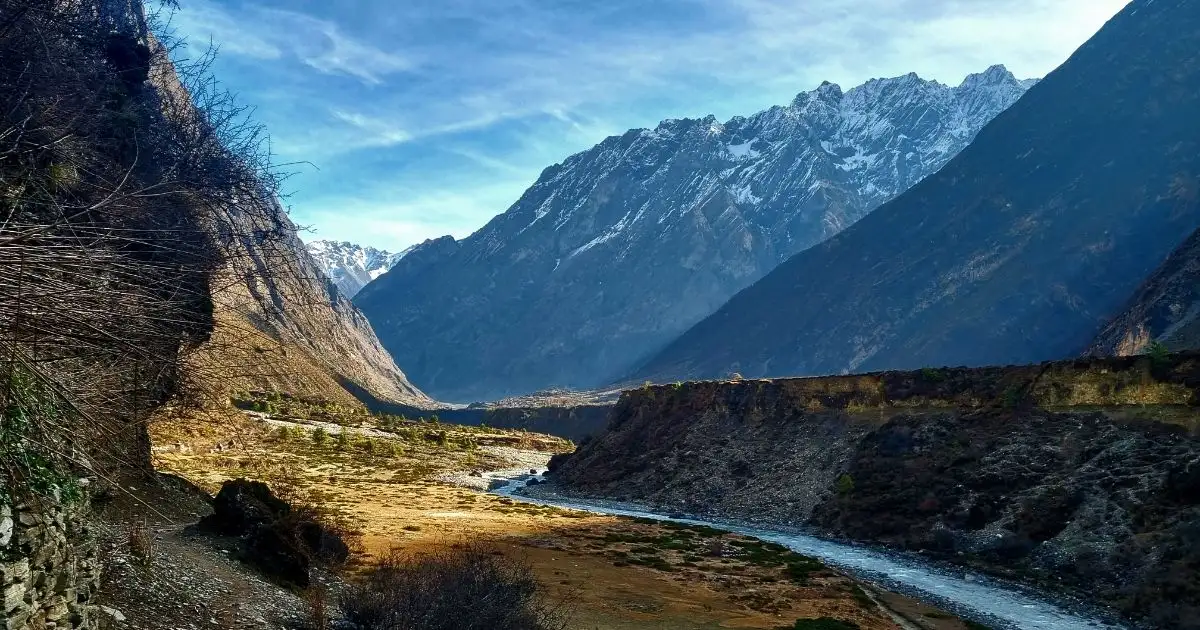 Best Seller Save $105
 Tsum Valley Ganesh Himal Base Camp and Manaslu Circuit Trek
24 days Strenuous
$1590
$1485 /person
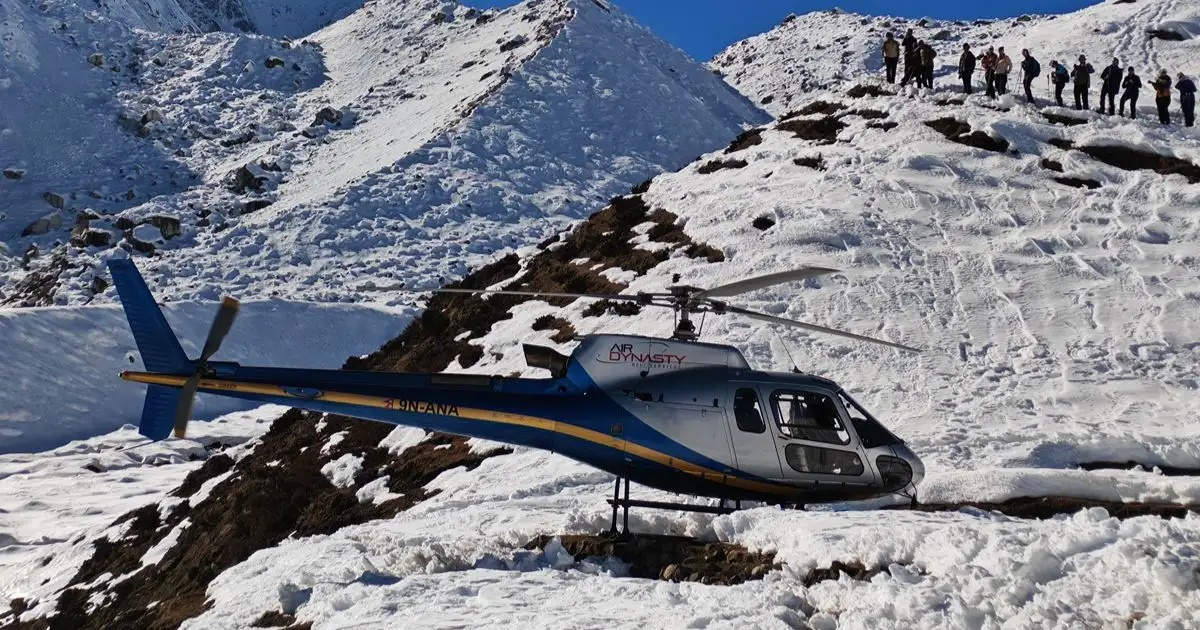 LIMITED TIME Save $230
 Manaslu Heli Tour 2026 | Price, Itinerary & Booking
1 days Easy
$2750
$2520 /person
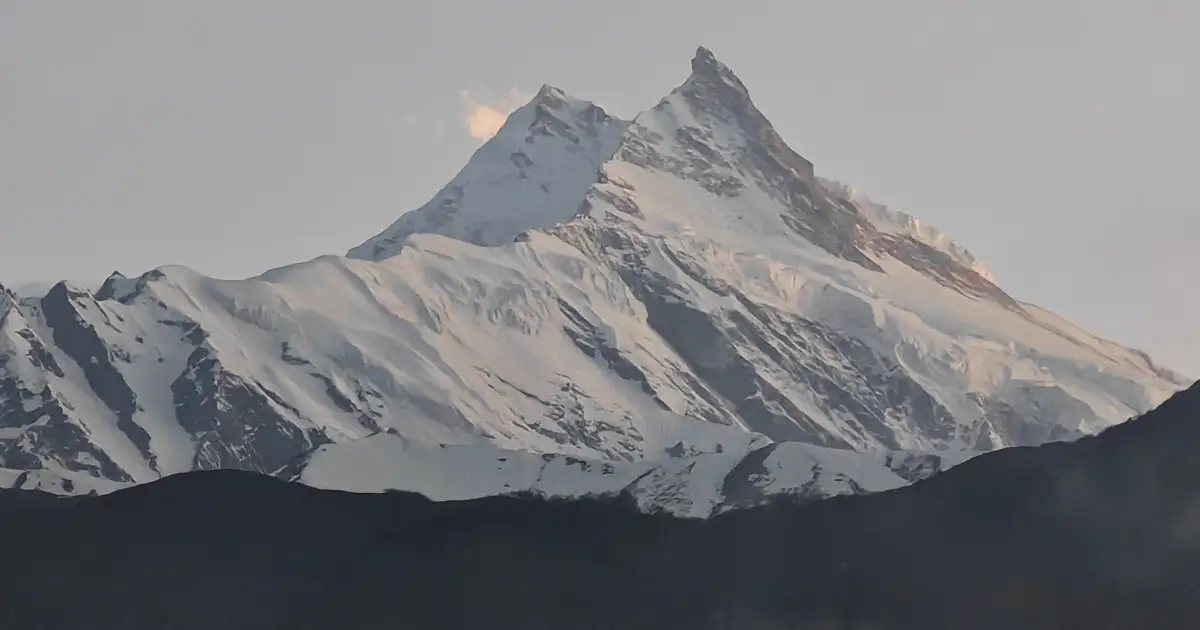 New Save $160
 Manaslu Photography Trek 2026/27 | Photo Trek in Nepal
18 days Strenuous
$1100
$940 /person
From
Book now $950 $1100