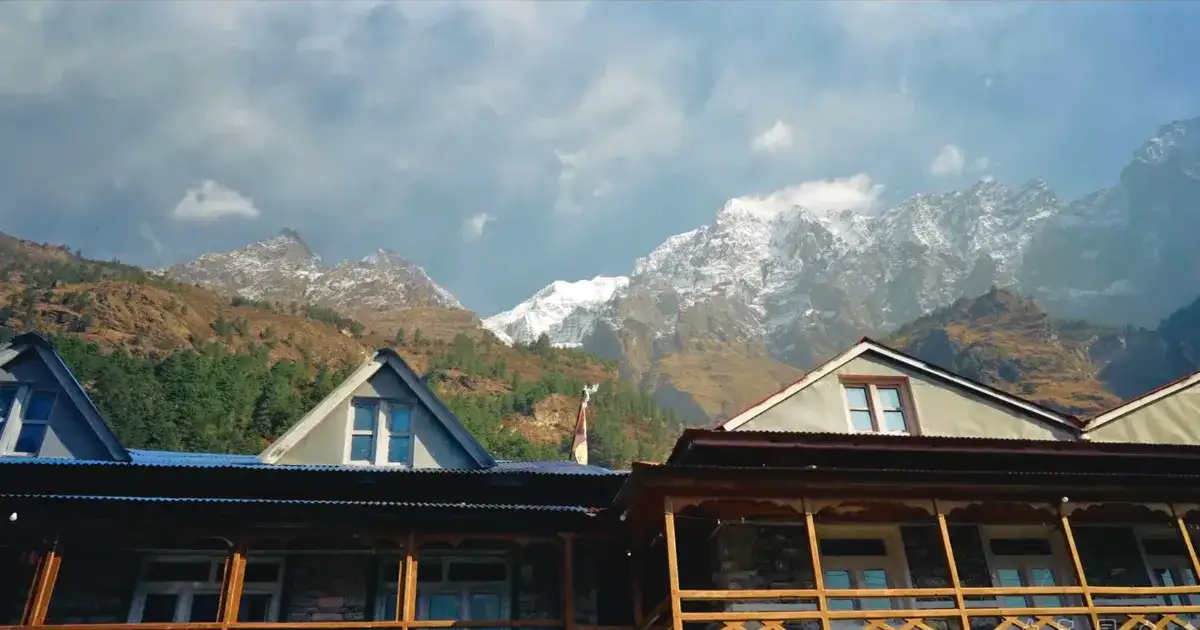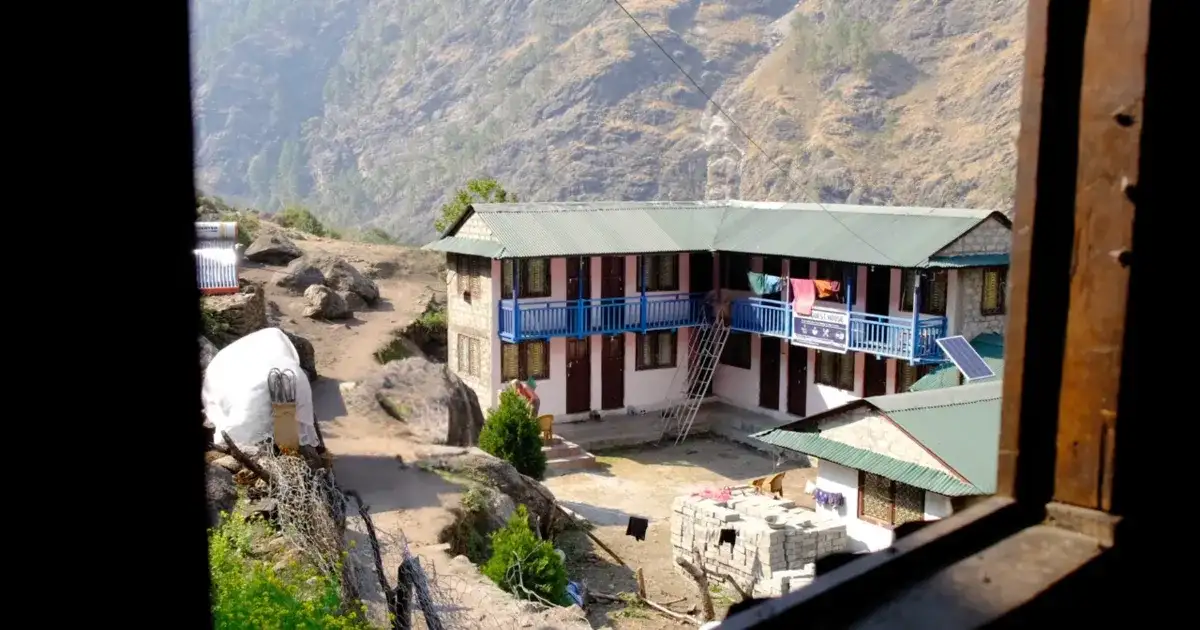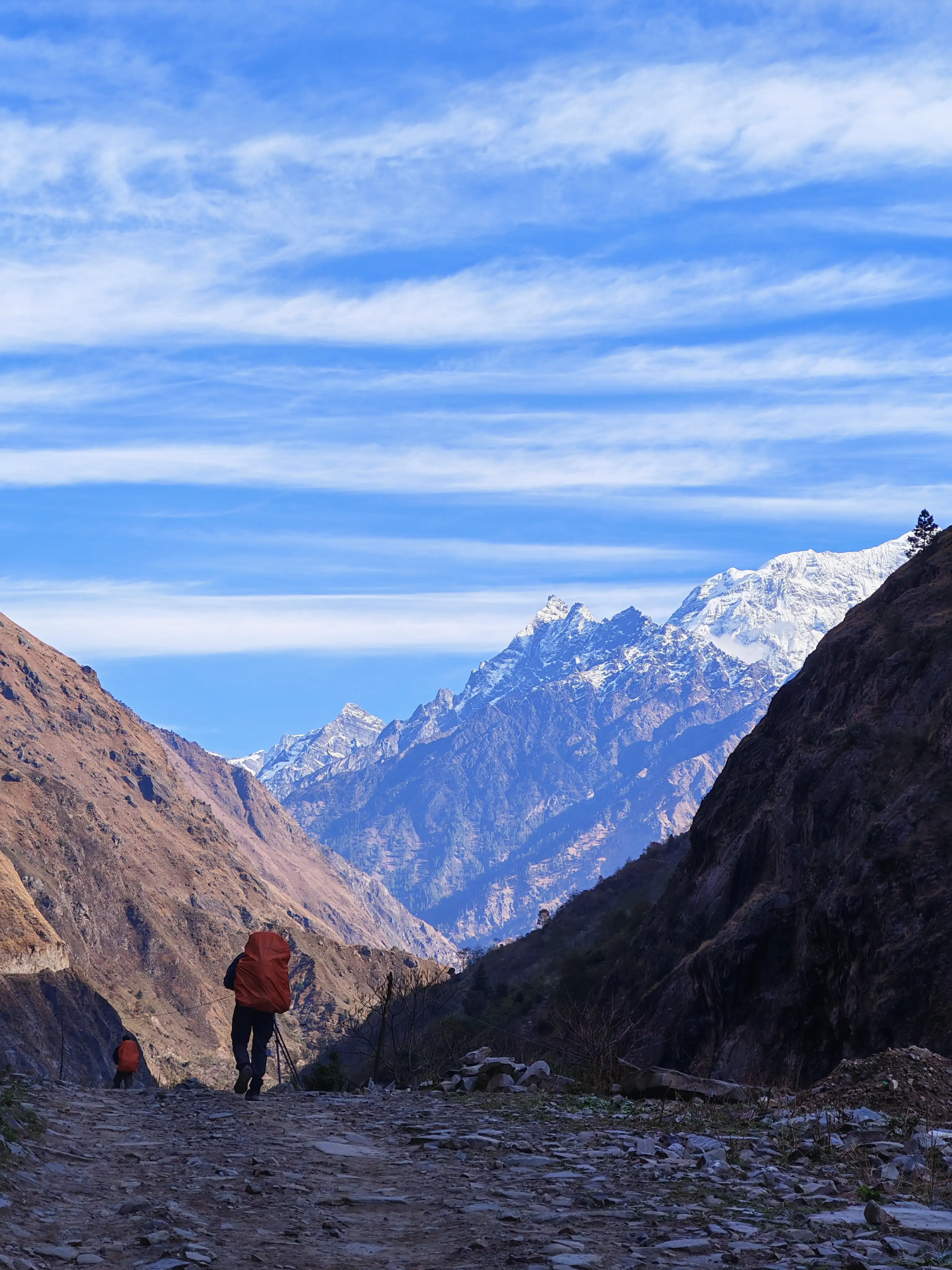
The Chumling to Lamagaon trek is a scenic section of the Tsum Valley Trek that takes around 5–6 hours of walking through forests, mountain villages, traditional Buddhist landscapes, and increasingly high Himalayan terrain. You will start from Chumling at about 2,386 meters. The trail gradually climbs toward Lamagaon, where you spend the night surrounded by the peaceful landscapes of upper Tsum Valley.
Day 4 of the Tsum Valley Trek feels like a gradual transition into the valley's deeper, more culturally distinctive section. The trail continues farther away from the lower Budhi Gandaki landscape and deeper into a valley after the previous day's journey toward Chumling. The valley is shaped by Tibetan Buddhist culture, traditional settlements, forests, and high Himalayan mountains.
The walk from Chumling to Lamagaon is not simply about gaining altitude. It is a day when the character of the Tsum Valley begins to change noticeably. The settlements become more traditionally Tibetan in appearance, prayer flags and mani walls become familiar sights along the trail, and the surrounding mountains begin to feel much closer.
This is also a day to settle into the rhythm of the Tsum Valley. The pace is generally manageable, but the continuous ascent means it is important not to rush. Taking regular breaks, drinking enough water, and maintaining a comfortable walking pace can make the day much more enjoyable.
Chumling to Lamagaon Trek at a Glance
It is a gradual journey into the higher and more culturally distinctive parts of the valley. The walk is a combination of forest trails, traditional villages, Buddhist landmarks, and Himalayan scenery.
Before starting the day's walk, here are the key details you should know:
| Trek Details | Information |
| Trek Route | Chumling to Lamagaon |
| Trekking Day | Day 4 of the Tsum Valley Trek |
| Starting Point | Chumling |
| Starting Elevation | 2,386 m |
| Ending Elevation | 3,280 m |
| Walking Duration | Around 5–6 hours |
| Difficulty | Moderate |
| Accommodation | Teahouse/lodge |
| Scenery | Forests, valleys, villages, waterfalls, and Himalayan mountains |
| Cultural Highlights | Mani walls, prayer flags, chortens, and Tibetan Buddhist traditions |
| Best Seasons | Spring and autumn |
A Typical Day From Chumling to Lamagaon
A typical trekking day begins with breakfast at the teahouse in Chumling. After packing your day bag and checking your water supply, you set out toward Lamagaon.
The first part of the walk is generally about getting into a steady rhythm. Rather than pushing hard at the beginning, maintain a pace that you can comfortably sustain for several hours.
A lunch stop along the route provides an opportunity to rest before continuing toward Lamagaon. The afternoon section gradually brings you into a higher and more remote landscape.
After reaching Lamagaon, check into your teahouse, have something warm to drink, and give your body time to recover. If the weather is clear, the late afternoon can also be a good opportunity for photography and a short walk around the village.
What Makes This Day Special?
The appeal of Chumling to Lamagaon lies in the combination of landscape and culture. You are not simply walking from one overnight stop to another; you are moving deeper into one of Nepal's culturally distinctive Himalayan valleys.
The further you travel into Tsum Valley, the stronger the Tibetan Buddhist influence becomes. Traditional villages, religious monuments, mountain scenery, and a slower pace of life create an atmosphere that feels distinctly different from the busy trekking routes elsewhere in Nepal.
For many trekkers, this is where the Tsum Valley Trek starts to feel like a true journey into the mountains rather than simply another multi-day hike.
In short, Chumling to Lamagaon is a moderate but rewarding trekking day that combines gradual altitude gain with traditional villages, Himalayan scenery, and the distinctive Buddhist culture of Tsum Valley. It is a day to walk patiently, enjoy the changing landscape, and prepare for the higher and more remote sections that lie ahead.
Why Spend the Night at Lamagaon?
Lamagaon is more than just a place to stop because the day's walking is finished. Staying here allows you to break the journey into comfortable stages while gradually gaining altitude.
After arriving, spend the afternoon resting at the teahouse, exploring the nearby village, photographing the surrounding landscape, or simply enjoying the quieter atmosphere.
The evening can be particularly peaceful. As daylight fades, the valley becomes quiet, temperatures drop, and the village takes on a completely different character. It is a good time to rest because the following trekking days take you farther into the higher parts of Tsum Valley.
Is Chumling to Lamagaon a Difficult Trekking Day?
For those who are reasonably prepared, Chumling to Lamagaon is generally a manageable day, but it should not be treated as an effortless walk. The combination of uphill sections, uneven mountain trails, and increasing elevation can make the journey tiring.
First-time trekkers should avoid comparing the difficulty only by the number of hours walked. Himalayan trekking is different from walking on a flat road or city trail. The terrain changes frequently, and carrying a backpack for several hours adds to the physical demand.
The best approach is to walk slowly and consistently rather than trying to finish quickly. A comfortable pace also gives you more opportunities to appreciate the landscape, take photographs, and interact with local communities along the way.
The Scenery Along the Chumling to Lamagaon Trail
This section offers a good mixture of natural and cultural scenery.
Depending on weather and visibility, you can expect to encounter:
- Dense Himalayan forests
- Mountain streams and waterfalls
- Suspension bridges and traditional trails
- Terraced farmland
- Traditional Tsumba villages
- Stone-built houses
- Mani walls and prayer flags
- Buddhist chortens and religious structures
- Dramatic mountain valleys
- Snow-covered Himalayan peaks in clear weather
For photographers, the changing landscape is one of the highlights of the day. Early sections of the trail can feel enclosed by forest, while higher sections gradually open toward wider views of the valley and surrounding mountains.
The villages are also worth slowing down for. Traditional architecture, prayer flags moving in the mountain wind, old stone walls, fields, and everyday village life provide a very different experience from trekking through Nepal's more commercialized routes.
Accommodation in Lamagaon
After several hours on the trail, reaching Lamagaon feels like a welcome pause in the journey through Tsum Valley. Accommodation here is generally based around simple, locally operated teahouses and lodges rather than hotels. The facilities are basic, but they provide the essentials trekkers need after a long day in the mountains.
A typical teahouse room has simple beds, mattresses, pillows, and blankets. Depending on the lodge and the season, you may find both private and shared rooms. Facilities become increasingly basic as you travel farther into the upper Tsum Valley. Teahouse accommodation is an important part of the trekking experience because many lodges are small, family-run businesses connected closely with the local community.
Don't expect the level of comfort you would find in Kathmandu or Pokhara. The charm of staying in Lamagaon is precisely that you are spending the night in a remote Himalayan settlement. The focus is on warmth, food, rest, and the experience rather than luxury.
What facilities can you expect in Lamagaon?
Facilities can vary between individual teahouses, so it is better to think of the following as typical rather than guaranteed:
- Basic private or shared rooms
- Beds with mattresses and blankets
- A common dining area
- Simple Nepali and Tibetan-influenced meals
- Electricity or charging facilities, depending on the lodge
- Basic toilet and washing facilities
- Hot water may be available for an additional charge
- Limited or unreliable internet connectivity
As you move higher into Tsum Valley, services become more limited compared with the lower trekking areas. Some trekking operators report that Wi-Fi is unreliable or unavailable in several settlements, while electricity and charging may depend on local infrastructure and solar power.
For this reason, carrying a power bank is a sensible idea. It is also worth downloading maps, important documents, and entertainment before leaving Kathmandu.
Should you book accommodation in Lamagaon in advance?
During the busier spring and autumn trekking seasons, arranging accommodation through your guide or trekking agency is sensible, particularly for groups. Tsum Valley is quieter than heavily visited routes such as Everest Base Camp, but its smaller number of lodges also means there are fewer alternatives if a preferred teahouse is full.
For independent trekkers, the situation can be more flexible. But checking the availability of accommodation before starting the day's walk is still a good idea.
Most importantly, don't judge Lamagaon accommodation by hotel standards. The real value is the location: you are spending the night inside a remote Himalayan community, surrounded by mountains and traditional Tsumba culture.
Food and Drinking Water
Food on the Chumling to Lamagaon trek is simple, filling, and designed to keep you moving rather than provide a gourmet dining experience.
Most teahouses serve familiar trekking staples such as dal bhat, noodles, rice dishes, soups, pasta, eggs, Tibetan-style bread, potatoes, and simple snacks. Dal bhat remains one of the most practical meals on a Nepal trek because it combines carbohydrates, lentils, and vegetables in a filling plate.
Breakfast is usually eaten before leaving Chumling, while lunch can be taken at a teahouse or eating stop along the route, depending on the exact itinerary. Dinner is served at the lodge in Lamagaon after you arrive.
What should you eat during the trek?
A good trekking-day strategy is to eat enough without making meals unnecessarily heavy.
For breakfast, options such as porridge, eggs, Tibetan bread, or toast can provide enough energy for the morning.
At lunchtime, dal bhat, noodles, soup, or another carbohydrate-rich meal can help replenish energy.
Dinner is usually the time to eat properly and recover from the day's walking. A warm bowl of soup or a plate of dal bhat can be particularly satisfying when temperatures fall in the evening.
As you climb higher, don't expect the same variety you would find in Kathmandu. The menu becomes more limited because transporting food and supplies into remote Himalayan villages is difficult.
Is drinking water available?
Yes, drinking water can generally be obtained along the Tsum Valley trekking route, but you should not assume that every natural stream or tap is automatically safe to drink.
You can refill your bottle at teahouses or designated water sources and then treat the water using a reliable purification method. A water filter, purification tablets, or another suitable treatment system can reduce the risk of waterborne illness.
Carrying at least one reusable water bottle or hydration system is useful, particularly on longer uphill sections.
It is also worth remembering that cold weather can reduce your feeling of thirst. You may not feel as thirsty as you would while hiking in a hot climate, but your body still needs regular hydration.
A simple rule for the day is to drink regularly rather than waiting until you feel very thirsty.
Weather and Temperature on the Chumling to Lamagaon Trek
Weather can change quickly in the Tsum Valley, and the conditions you experience on the Chumling to Lamagaon trail will depend heavily on the season.
The lower sections of the valley can feel relatively mild during the daytime, while temperatures drop noticeably after sunset. As you gain elevation, the air becomes cooler, particularly in the morning and evening.
This is why the same trekking route can feel completely different in spring, monsoon, autumn, and winter.
Spring: March to May
Spring is one of the most attractive periods for trekking in Tsum Valley. Days are generally suitable for walking, and the forests can become particularly lively as vegetation and rhododendrons come into bloom.
Morning conditions are often cooler, while daytime temperatures can become comfortable for trekking.
A light insulating layer, waterproof jacket, and warm evening clothing are still useful because mountain weather can change quickly.
Monsoon: June to September
The monsoon season brings a different set of challenges.
Rain can make trails wet and slippery, while clouds may obscure mountain views. Muddy paths, leeches in lower and wetter sections, and occasional trail disruption can also become concerns.
If you are planning the Chumling to Lamagaon trek during the monsoon, waterproof clothing, a rain cover for your backpack, and footwear with good grip become particularly important.
Autumn: October to November
Autumn is traditionally one of Nepal's most popular trekking seasons. After the monsoon, skies often become clearer, and mountain visibility can be excellent.
The combination of relatively stable trekking conditions and clear Himalayan views makes this a particularly appealing period for the Tsum Valley.
However, popular trekking periods can also mean more people and greater demand for limited accommodation.
Winter: December to February
Winter brings colder conditions, particularly at night and in the early morning. Higher parts of Tsum Valley can experience snowfall, and conditions may become considerably more difficult depending on the year's weather.
If you trek during winter, warm layers, gloves, a good sleeping system, and proper cold-weather preparation are important.
The key point is that there is no single temperature you should expect in Lamagaon. Mountain temperatures vary with season, altitude, cloud cover, wind, and time of day. For a travel article, it is better to describe these conditions honestly than publish a single temperature range that may not represent actual trail conditions.
Altitude and Acclimatization
Altitude becomes increasingly important on the Chumling to Lamagaon section because the trail takes you significantly higher into Tsum Valley.
Chumling is commonly listed at around 2,386 meters, while Lamagaon is commonly listed at around 3,020 meters, although route itineraries and village elevations can vary slightly.
That means this stage involves a meaningful elevation gain, making pacing and acclimatization more important than simply counting the number of kilometers walked.
Why is acclimatization important here?
Your body needs time to adjust as you move into thinner air. You may notice that walking uphill feels more tiring than it did at lower elevations, even if you are physically fit.
This doesn't necessarily mean something is wrong. What matters is paying attention to how your body responds.
The best strategy is simple:
Walk slowly, stay hydrated, eat properly, and avoid rushing the ascent.
Don't try to prove your fitness by racing uphill. A steady pace that allows you to breathe comfortably is much more useful on a multi-day Himalayan trek.
What symptoms should you watch for?
Altitude-related illness can present with symptoms such as:
- Headache
- Unusual tiredness
- Dizziness
- Nausea
- Loss of appetite
- Difficulty sleeping
- Shortness of breath beyond what would normally be expected from exertion
A mild headache or tiredness can have several causes, so not every symptom automatically means altitude sickness. However, symptoms that worsen or become severe should never be ignored.
If you feel unwell at altitude, tell your guide or trekking partner rather than trying to hide it and continue walking.
Severe symptoms such as difficulty breathing at rest, confusion, inability to walk normally, or a significant deterioration require urgent attention. You have to descend according to professional medical guidance.
How can you make the Chumling to Lamagaon ascent easier?
The most effective approach is not complicated.
Start the morning slowly. Keep your pace consistent. Drink water throughout the day. Eat even if your appetite is lower than normal. Take short breaks instead of waiting until you are exhausted.
Most importantly, listen to your body rather than your itinerary. A trekking schedule is a plan, not a race.
Your guide can also help monitor the group's pace and determine whether adjustments are necessary based on weather, trail conditions, and how you are responding to the elevation.
Does staying in Lamagaon help with acclimatization?
Yes, the overnight stop is part of the gradual progression into higher elevations. Rather than jumping immediately from the lower valley to the highest settlements, a well-planned itinerary increases altitude progressively.
This is one reason why trekking itineraries should not be judged solely by how quickly they reach the destination. A slightly slower schedule can give your body more time to adapt.
The Chumling to Lamagaon section therefore serves two purposes: it takes you deeper into the cultural heart of Tsum Valley while gradually preparing you for the higher terrain ahead.
For those, that combination is what makes this day more than just another point-to-point walk. You are gaining altitude, but you are also moving deeper into a remote Himalayan landscape. You will pass through the Buddhist village, and mountain environment, which become increasingly prominent.
Frequently Asked Questions About Chumling to Lamagaon Trek
1. How long does it take to trek from Chumling to Lamagaon?
The trek from Chumling to Lamagaon generally takes around 5–6 hours, depending on your pace, trail conditions, stops, and the exact route followed.
2. What is the elevation of Lamagaon in Tsum Valley?
Lamagaon is commonly listed at around 3,000 meters above sea level. Elevation figures can vary slightly between trekking maps and itineraries.
3. Is Chumling to Lamagaon difficult?
The Chumling to Lamagaon trek is generally considered moderate in difficulty. The gradual uphill sections and increasing altitude can make the walk tiring, so maintaining a steady pace is important.
4. Is there accommodation in Lamagaon?
Yes, basic teahouses and lodges are available in Lamagaon. Accommodation is generally simple, with basic rooms, beds, blankets, and shared facilities.
5. Can I get hot showers in Lamagaon?
Hot showers may be available at some teahouses in Lamagaon, usually for an additional charge. Availability can vary depending on the lodge, season, and local facilities.
6. Is there internet access in Lamagaon?
Internet access in Lamagaon can be limited or unreliable. Wi-Fi availability varies between lodges, so you should not depend on having a stable connection.
7. What mountains can you see between Chumling and Lamagaon?
The trail offers views of the surrounding Himalayan peaks and steep mountain valleys, with visibility depending heavily on weather. On clear days, the changing landscape provides excellent opportunities for mountain photography.
8. Do I need a guide for the Chumling to Lamagaon trek?
Yes. Tsum Valley is a restricted trekking area, so you need the required permits and must follow the applicable regulations regarding authorized trekking arrangements and guides.
9. Is Chumling to Lamagaon safe in winter?
The route can be trekked in winter, but cold temperatures, snow, icy sections, and changing mountain weather can make the journey more challenging. Proper winter equipment and current trail conditions should be checked before departure.
10. Can beginners trek from Chumling to Lamagaon?
Yes, beginners can trek from Chumling to Lamagaon if they have reasonable fitness and follow a properly paced itinerary. Previous high-altitude trekking experience is helpful but not essential.
11. What should I pack for this section of the Tsum Valley Trek?
Carry warm layers, waterproof clothing, trekking shoes, a reusable water bottle, water purification, snacks, sunscreen, a headlamp, basic medication, and a power bank. Your exact packing list should also reflect the season.
12. Where can I eat lunch between Chumling and Lamagaon?
Lunch is generally available at teahouses or small local lodges along the route, depending on the exact itinerary. Dal bhat, noodles, soup, rice dishes, eggs, and other simple trekking meals are commonly available.